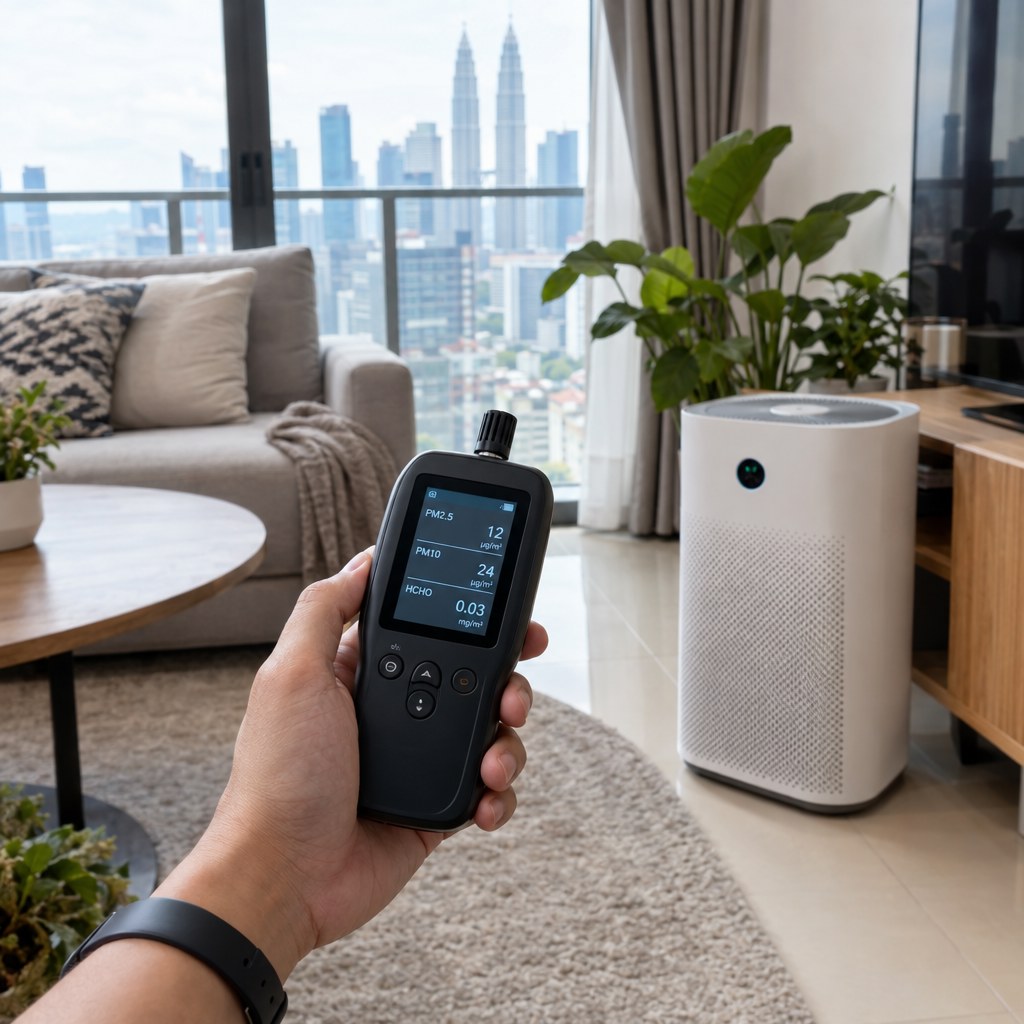
When an air purifier professional is worth considering
You do not need an air purifier professional every time your home feels stuffy, dusty or warm. In many Malaysian homes, the practical first steps are simple: improve cleaning habits, control obvious sources of pollution, ventilate at suitable times and maintain the aircond properly. However, a professional assessment can be useful when the problem is persistent, unclear or affecting someone more vulnerable at home.
I would consider seeking help when you have recurring odours, visible mould, unexplained dust build-up, family members who react differently in one room, or readings from a meter that do not match what you are experiencing. A professional should not be there merely to sell another machine. The useful role is to help you understand the likely source, measure the right things where appropriate, and decide whether an air purifier is actually part of the solution.
For Malaysian homeowners, indoor air issues are rarely caused by one factor alone. Humid weather, closed windows, cooking fumes, roadside traffic, renovation dust, pets, aircond use and seasonal haze can all overlap. A portable purifier may help with airborne particles in a defined room, but it cannot fix a damp wall, a leaking ceiling, poor kitchen extraction or an overcrowded bedroom with stale air.
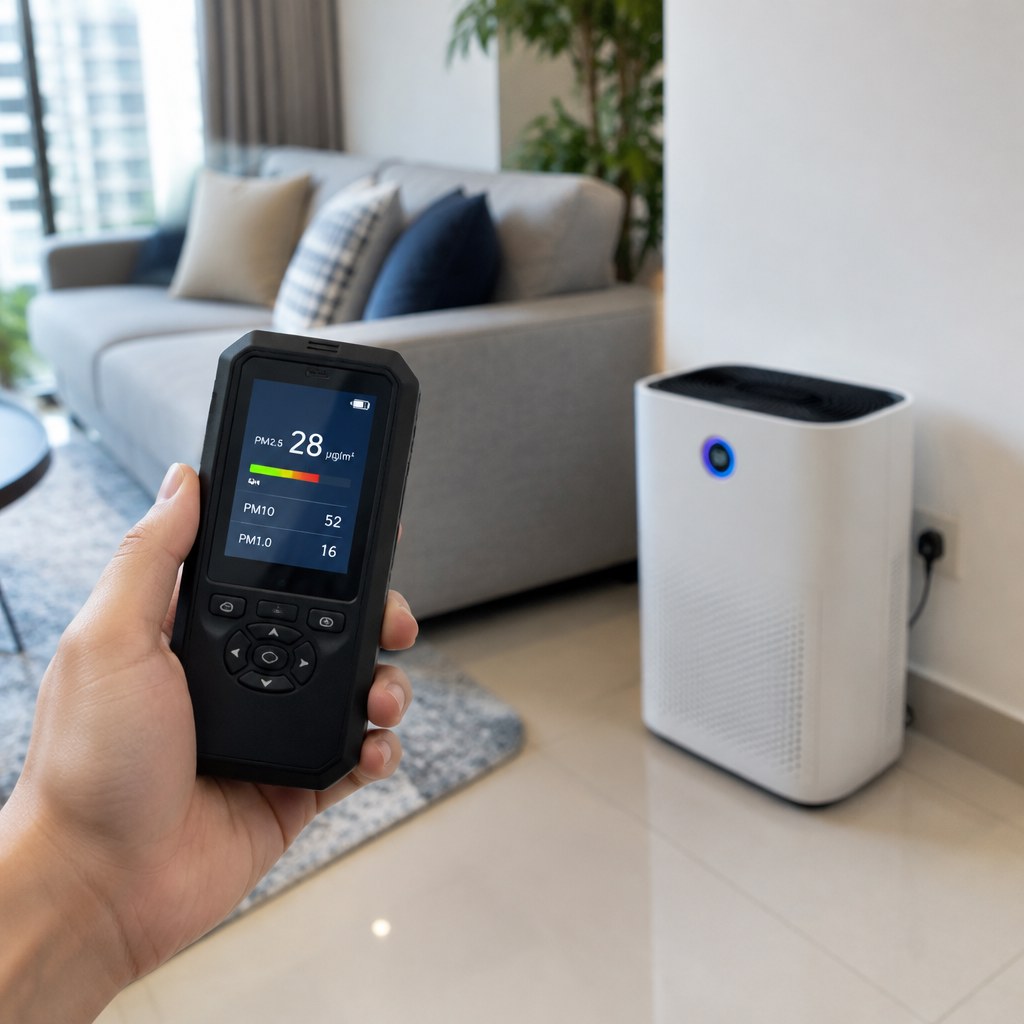
Signs your home may need a closer assessment
Not every concern needs home air quality testing Malaysia homeowners may be looking for. Still, I would not ignore a pattern simply because it is difficult to explain. Pay attention to when it happens, where it happens and whether it improves after changing a routine.
- A bedroom smells musty after rain or after the aircond has been running.
- Cooking smells travel through the condominium unit and remain for hours.
- Dust settles unusually quickly near windows, balconies or busy roads.
- One room feels noticeably stuffier than the rest of the house.
- There is visible condensation, water staining, mould growth or a recent leak.
- Someone experiences irritation mainly at home, especially in a particular room.
- A consumer air-quality meter gives changing readings that you cannot interpret.
For example, a Klang Valley condominium facing a highway may receive more outdoor particle pollution when windows are open. A terrace house may have smoke and odours entering from nearby cooking, burning or traffic. In another home, the issue may be moisture trapped in a spare room that is rarely opened. These situations need different responses, so buying the largest purifier available is not necessarily the sensible answer.
A good assessment begins with questions. What changed? Was there renovation work? Is the issue worse during haze periods, after frying food, overnight, or when the aircond is switched on? Does opening a window improve the room or make it worse? The answers can reveal more than a single number on a display.
💡 Practical note: If you can clearly see mould, water damage or an active leak, address the moisture source first. No air purifier can make a damp building problem disappear.
When a specialist is probably unnecessary
There are also situations where you can start with sensible steps without calling an indoor air quality specialist. If your concern is occasional cooking smoke, a dusty fan, a dirty aircond filter or temporary haze outside, start with practical maintenance and observation. Keep doors closed during poor outdoor conditions, use the kitchen hood if available, clean grease around the cooking area and wash or service filters according to the equipment instructions.
If you simply need help choosing a suitable portable unit for a bedroom or living room, begin with my guide on how to choose an air purifier in Malaysia. It covers the decision process without assuming that every household needs formal testing. If filtration terms are confusing, this explanation of what a HEPA filter means in an air purifier may also be useful.
In my view, a professional becomes more valuable when simple steps have not changed the situation, when there may be moisture or ventilation problems, or when you need a more careful interpretation before spending significant money.
What an air-quality assessment can and cannot tell you
A professional air purifier consultation should be an investigation, not a sales demonstration. The scope may include looking at room layout, likely pollution sources, air movement, occupancy, cleaning routines, aircond operation and the relationship between indoor and outdoor conditions. Depending on the concern, testing may include particles, humidity, carbon dioxide or other measurements.
What matters is context. A particle reading may rise while someone is frying fish, vacuuming, opening a balcony door or making the bed. That does not automatically mean the home is permanently unsafe. It shows that particles were present at that time and that further comparison may be useful. Likewise, a humidity reading may point to moisture management concerns, but it does not identify the exact source of water behind a wall.
No responsible consultant should use a short visit to diagnose a medical condition, certify a house as completely safe or guarantee health outcomes. Indoor conditions vary by time, weather, activities and the room being measured. A meaningful assessment explains those limits clearly.
For general background on indoor air quality, I recommend reading the United States Environmental Protection Agency indoor air quality information. For current outdoor conditions, Malaysia’s Department of Environment APIMS portal is a useful reference before deciding whether opening windows is sensible.
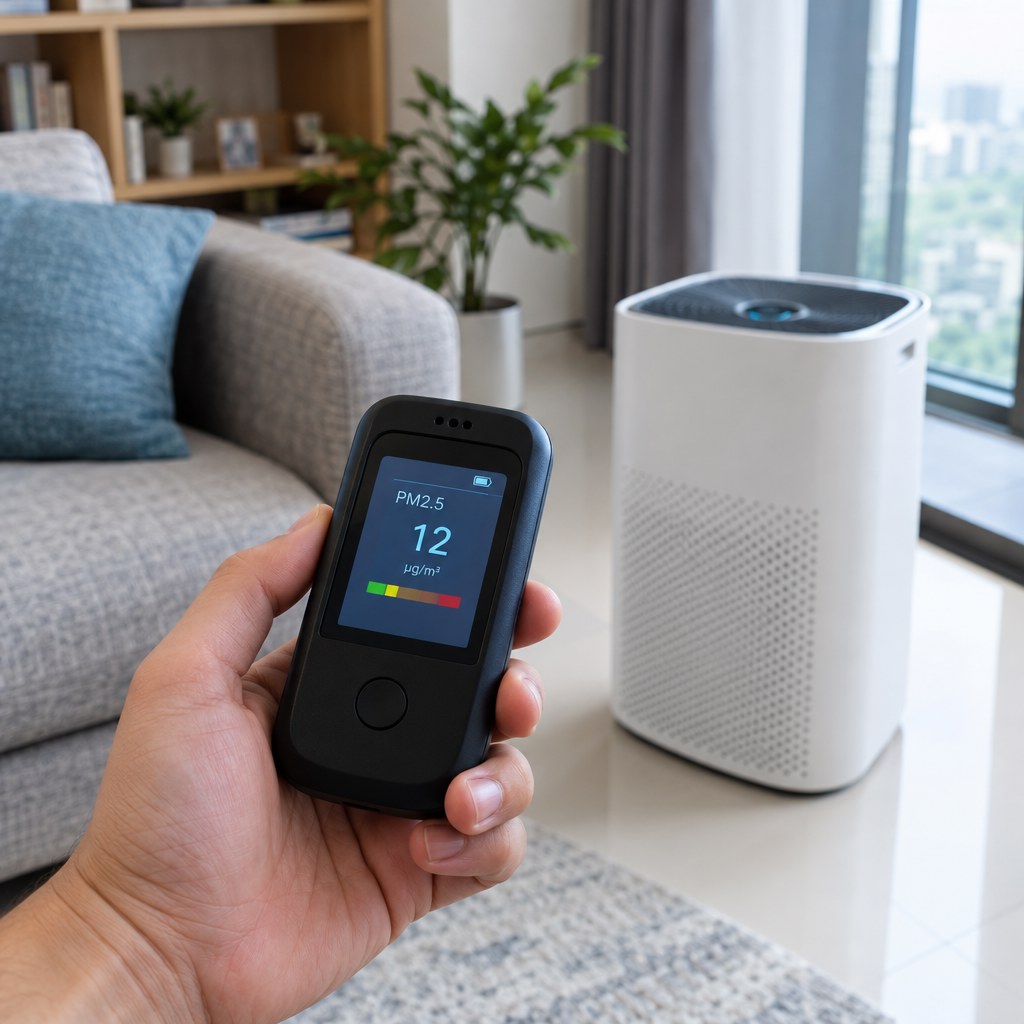
Understanding PM2.5, humidity and carbon dioxide readings
PM2.5 readings are a clue, not a diagnosis
PM2.5 refers to very small airborne particles. Consumer meters may help you notice changes from cooking, outdoor haze, traffic or cleaning activity. A useful approach is to compare readings indoors and outdoors at roughly the same time, while noting whether windows and doors are open. If indoor readings rise sharply after cooking, source control and kitchen ventilation may matter more than adding another purifier.
Consumer particle meters can be useful for trends, but they have limits. Placement, airflow, sensor quality, humidity and maintenance can affect the result. They are not automatically equivalent to calibrated instruments used within a defined testing method. Do not treat one reading as a final verdict on your family’s health or your home’s safety.
Humidity matters when moisture is part of the story
Malaysia’s humid climate makes moisture control especially relevant. If a room regularly smells damp, has condensation or shows mould, humidity monitoring may help confirm a pattern. Yet the important work is finding why moisture is present: a leak, inadequate drying after bathing, poor airflow, wet laundry indoors or a room that stays closed for long periods.
Carbon dioxide can indicate ventilation conditions
Carbon dioxide monitoring can be relevant in occupied rooms with closed doors and windows. It may indicate that fresh-air exchange is limited for the number of people in the room. It is not a universal pollution meter and it does not measure every contaminant. A high reading does not tell you which pollutant is present, while a low reading does not guarantee that no other issue exists.
Start with the hierarchy of sensible air quality solutions
Before choosing equipment, I encourage homeowners to work through the problem in the right order. The most effective option often reduces pollution at the source rather than trying to filter everything after it enters the room.
Control the source
Repair leaks, clean mould safely, reduce smoke, manage pet dander and keep renovation dust contained. Source control is often the most important step.
Improve ventilation wisely
Use suitable ventilation when outdoor air is cleaner, but avoid blindly opening windows during haze, heavy traffic or nearby smoke events.
Use filtration appropriately
A portable purifier can reduce airborne particles in the room it serves, provided it is correctly sized, positioned and maintained.
Maintenance is part of every solution. A purifier with neglected filters, an aircond with poor servicing, or a kitchen hood clogged with grease will not perform as intended. Check manufacturer instructions, keep air paths unobstructed and avoid placing a purifier where furniture blocks intake or clean air delivery.
During haze periods, it can help to review the outdoor situation first. My article on Malaysia haze, home air quality and air purifiers explains why an indoor plan should account for what is happening outside, not just what is displayed on a machine.
How to choose a credible air filtration specialist
If you decide to consult someone, ask what they will assess before booking. A credible air filtration specialist should be willing to discuss your concern, the rooms involved, the likely scope, the equipment used and what the results can realistically show. Ask whether they provide an explanation of findings rather than simply recommending a product immediately.
- What problem are we trying to investigate?
- Which measurements are relevant, and why?
- Are the instruments suitable for the stated purpose?
- How will indoor and outdoor conditions be compared if needed?
- What are the limitations of the test and interpretation?
- What actions might be recommended besides buying a purifier?
- What are the availability, scope and cost of the service?
I would be cautious of anyone promising to “prove” that a particular machine will solve every symptom, eliminate all pollutants or guarantee a perfectly healthy home. Good advice is usually more measured. It may involve a mix of cleaning, repairs, ventilation changes, moisture management, filtration and observation over time.
You can also learn more about the approach behind CoachKen360 on the About page. The aim should be practical understanding, not unnecessary fear about the air in your own home.
Frequently asked questions from Malaysian homeowners
Should I get testing before buying an air purifier?
Not always. If you have a straightforward need, such as reducing particles in a bedroom during haze or dealing with occasional cooking odours, you may be able to make a sensible decision without testing. Testing is more useful when the source is unclear, the problem persists or you need help comparing possible solutions.
Can a PM2.5 meter tell me whether my home is safe?
No. It can show particle trends, which may be useful, but it does not diagnose illness or measure every indoor pollutant. Consider what was happening when the reading changed, compare indoor and outdoor conditions where appropriate, and avoid drawing broad conclusions from one number.
Does an air purifier remove mould and dampness?
A purifier may capture some airborne particles, but it does not remove mould growth from surfaces or stop the moisture that allows mould to return. Resolve leaks, condensation and ventilation issues first. If there is extensive mould or building damage, seek advice suited to the underlying property problem.
Is it better to open windows or run the aircond?
It depends on outdoor air quality, weather, noise, traffic, humidity and the reason you are ventilating. Opening windows may help a stuffy room when outside air is relatively clean. During haze, heavy traffic or nearby smoke, keeping openings closed and using suitable filtration may be more practical. Aircond can improve comfort, but it does not automatically provide fresh outdoor air.
Test the facts before buying another machine
Not sure what is happening with the air at home? Contact CoachKen360. Tell us what you are noticing and we can discuss suitable indoor air quality testing, check the actual readings with you, and explain what those readings do — and do not — mean. Ask about availability, scope and cost before proceeding.
A measured next step for your home
My simple view is this: consult an air purifier professional when your indoor-air concern is persistent, confusing, moisture-related or significant enough that guessing could waste money. For ordinary, clearly understood situations, begin with source control, sensible ventilation, regular maintenance and a suitable portable purifier where needed.
The best decision is rarely based on fear, advertising claims or a single meter reading. Observe the pattern, identify likely sources, compare conditions carefully and choose air quality solutions that fit your actual home. That approach is more useful than buying equipment first and hoping it solves a problem nobody has properly defined.