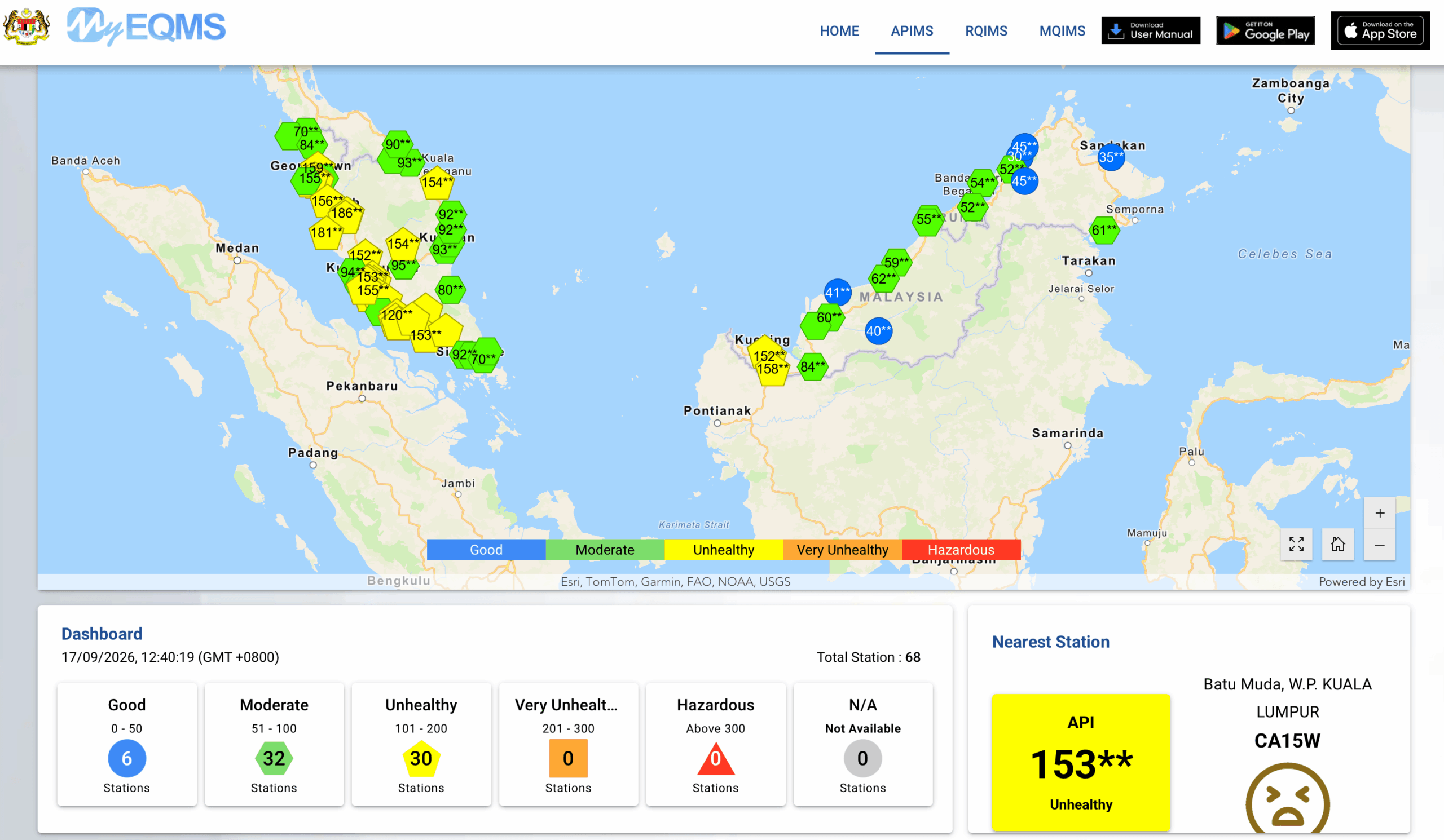
Today is 17 September 2026. I opened the APIMS website and checked the air quality again. Wah… not very nice. Some places around Kuala Lumpur are already showing unhealthy API levels. When we see this kind of reading, most of us will probably do the same thing. Close the windows, close the doors, switch on the air-conditioner and tell ourselves, “Okay lah, now I’m indoors already, should be safe.”
I believe many people think like this. I used to think the same way too. Outside air is bad, so naturally we assume the air inside the house must be better. But one question kept coming back to me: once we close all the windows and doors, what is actually cleaning the air inside the house?
That is the part many of us don’t really think about.
Malaysia’s haze is nothing new. Every now and then, the sky turns grey, buildings in the distance become blur, cars get dusty and suddenly everyone starts checking the API again. Some people may cough more. Some feel their throat becoming dry. Some notice their eyes getting irritated. Then we say, “Haze lah,” and continue with our day.
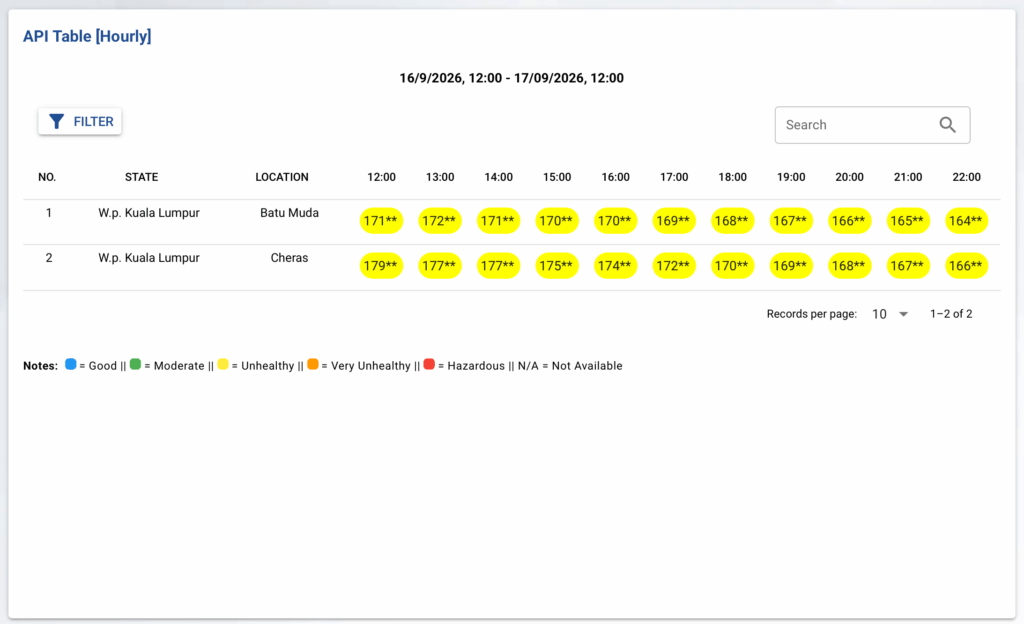
For those who are not familiar with it, API means Air Pollutant Index. The Department of Environment uses six pollutants in the calculation: PM2.5, PM10, sulphur dioxide, nitrogen dioxide, ozone and carbon monoxide. Each pollutant produces its own sub-index, and the highest one becomes the API reading shown for that monitoring station.
The reading is quite easy to understand. From 0 to 50 is considered good, 51 to 100 is moderate, 101 to 200 is unhealthy, 201 to 300 is very unhealthy, and anything above 300 is hazardous. So when you see a reading of 150, it is not just a yellow number on the screen. It already means the air is classified as unhealthy. The Department of Environment also gives special attention to older people, children, pregnant women and people with heart or lung conditions when the API goes into the unhealthy range.
So naturally, when the outdoor air is bad, we close the windows and stay indoors. That part makes sense. Closing doors and windows can help reduce the amount of polluted outdoor air coming into the house. But closing everything does not automatically clean the air that is already inside.
Our homes are not completely sealed. Outdoor air can still enter when we open the door, through gaps and through ventilation. At the same time, we also create our own indoor air problems. Cooking, dust, cleaning products, smoke, candles, pets, moisture and even renovation materials can affect the air inside.
This does not mean every home has bad air. I don’t believe in saying things like that just to scare people. Your home may be perfectly fine. Another home may have a completely different condition. Without checking, we are only guessing.
Then people will tell me, “But Coach, I already turn on the air-conditioner. Aircond got filter mah.”
Yes, the air-conditioner has a filter. But we need to understand what the air-conditioner is mainly designed to do. Its main job is to cool the room. The filter inside can help capture dust and protect the system. Some newer air-conditioners may also come with additional air-cleaning features. That is useful. But don’t bluff yourself and assume every air-conditioner is doing the same job as a proper air purifier.
They are not exactly the same.
An air-conditioner mainly manages temperature and comfort. A dedicated air purifier is designed to keep pulling room air through a filtration system again and again. During a haze period, this becomes more important because when you close the doors and windows, the question is: what is continuously filtering the air inside?
This is where an air purifier has its role.
You can close your windows and doors to reduce polluted air from coming in, but proper indoor filtration can help deal with certain particles that are already circulating inside. These two things work together. One reduces what comes in. The other helps filter what is already in the room.
Of course, even an air purifier is not magic. Not every purifier is the same. A small unit placed in a large living room may not be enough. Filter type matters. Room size matters. Airflow matters. Filter maintenance matters. How long you run the machine matters too.
So when someone asks me, “Coach, which air purifier is good?” I normally want to ask back, “Good for what?”
Bedroom? Living room? Office? Haze? Dust? Odour? Something else?
There is no point buying a machine simply because it looks nice or because the advertisement says “air purification.” You need to know what problem you are trying to solve.
The same goes for air-conditioners that come with air purification features. Some models really do have additional technology built in, but you still need to understand what the system actually does. What type of particles can it capture? How much air is passing through the filter? How often must it be cleaned or replaced? Is it designed to handle fine particles properly?
Don’t just see the word “purification” and assume everything is settled.
Sometimes we comfort ourselves too easily. Window closed already. Door closed already. Aircond cold. Room smells nice. So we tell ourselves, “Safe already lah.”
Maybe yes. Maybe no.
A cold room does not automatically mean clean air. A room that smells nice does not automatically mean clean air either. Even a very clean-looking house can still have airborne particles that we cannot see.
That is why I prefer testing instead of assuming.
During haze, some people may notice they cough more, their throat feels dry, their eyes feel uncomfortable or their nose gets irritated. Can air pollution be part of the reason? Yes, it can irritate the respiratory system and the eyes. But I would never say every cough means your indoor air is bad. There can be many reasons. If the symptoms continue or become serious, please speak with a healthcare professional.
What I would say is this: if the outdoor API is already unhealthy and your body starts feeling uncomfortable, don’t simply ignore the environment around you. Pay attention. Check what has changed. Reduce unnecessary exposure. And if you are concerned about the air inside your home, measure it.
That is the interesting part. Today, you can open APIMS and check the outdoor API around your area within seconds. You can see the reading for Batu Muda, Cheras, Shah Alam, Putrajaya and other monitoring stations. Very convenient.
But what is the air quality inside your bedroom?
What about your living room?
Most of us don’t know.
We always assume outside bad, inside good. Door closed, aircond on, settle already.
But maybe not.
This is why I prefer one simple approach: test first.
Don’t simply buy. Don’t simply believe a salesman. Don’t simply believe me also. 😂
If you are curious about the air inside your home, test it. At least you can see the readings for yourself. Maybe everything is okay. Good. Then at least you know.
If the readings show something worth looking into, then only we start asking why. Is it coming from outdoor haze? Cooking? Dust? Poor ventilation? Another indoor source? Then we can decide whether filtration makes sense and what type of solution is suitable.
I think this is much better than buying first and asking questions later.
I also don’t like fear selling. Haze is already worrying enough. The sky turns grey, the news says unhealthy, and suddenly every advertisement tells you that your family is in danger and you must buy something immediately.
I don’t like that approach.
I prefer you understand first.
If the outdoor air is bad, reduce your exposure. Close unnecessary windows. Don’t keep bringing polluted outdoor air into the house. If you are going to spend many hours indoors, then yes, proper indoor filtration is something worth considering.
But choose properly.
Understand what you are buying.
Understand what the machine can do.
And most importantly, understand your own indoor environment.
That is what I believe CoachKen360 should do — not frighten you, not simply tell you “buy this,” but help you understand the situation and point you in the right direction.
The funny thing is, we only talk about air when haze comes. Once the sky becomes blue again, everybody forgets.
But we breathe every day.
When we sleep, we breathe.
When we work, we breathe.
When we sit in the living room watching TV, we breathe.
So while everyone is checking the haze outside today, maybe ask yourself one more question:
Do you actually know what the air is like inside your own home?
If you don’t know, don’t assume.
You can contact me. We can look at an indoor air-quality check first, see what the readings show and then decide what direction makes sense.
No need to scare yourself.
No need to guess.
See the numbers first.
Then decide.
CoachKen360
WhatsApp: 016-311 7171
Reference Note
Malaysia’s Air Pollutant Index information above is based on the Department of Environment’s official API calculation document. The API uses six pollutant parameters, and the highest pollutant sub-index becomes the reported API reading.
For current outdoor conditions, readers should check the official APIMS platform because API readings can change throughout the day.
Disclaimer
This article is for general information only and is not medical advice. Air quality varies between locations and individual homes. If you experience persistent coughing, breathing difficulty, chest discomfort or other worrying symptoms, please consult a qualified healthcare professional.