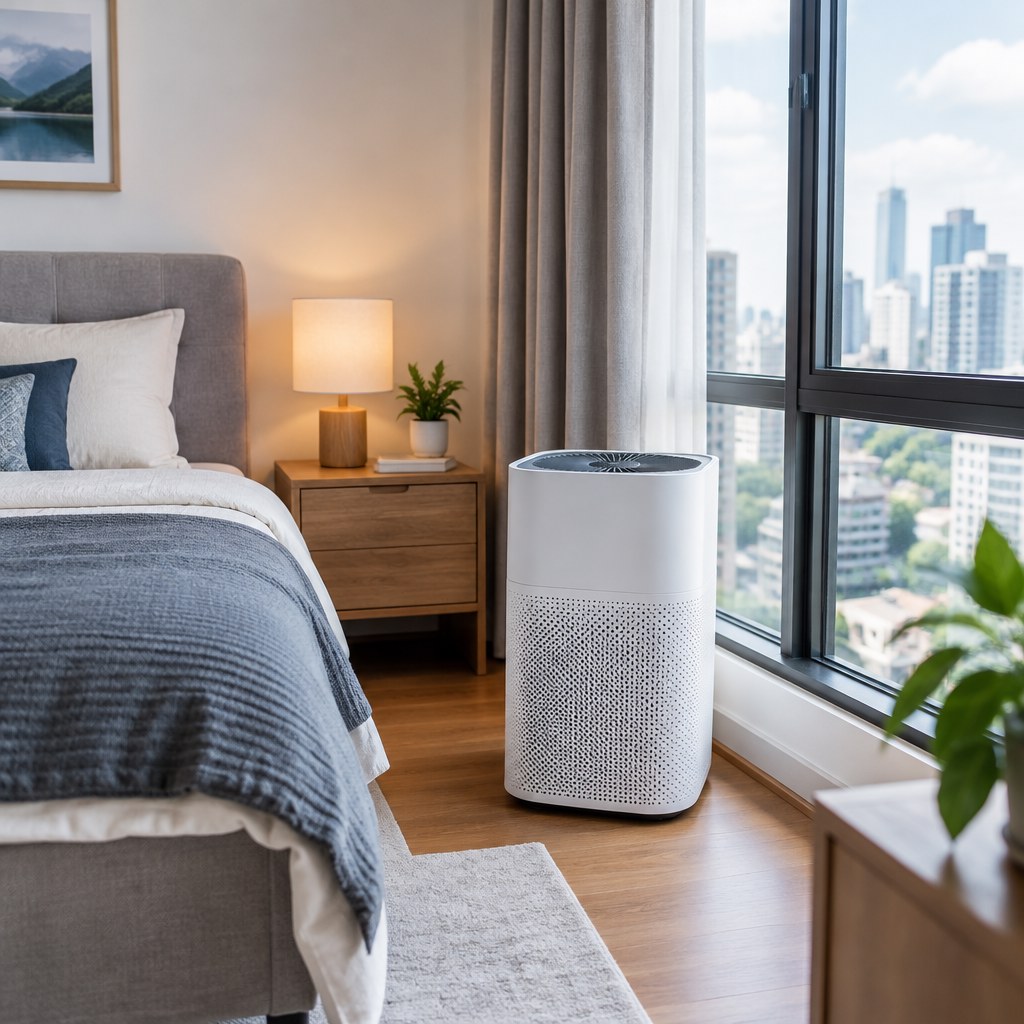
Does your air purifier really need a HEPA filter?
If you are buying an air purifier for dust, haze particles, pollen, pet dander or everyday fine particulate matter, I would generally look for a properly specified HEPA filter. It is not a magic health shield, and it will not solve every indoor-air problem, but it is the main filter technology designed to physically capture very small airborne particles efficiently.
For many Malaysian homes, that matters. A KL condo bedroom near traffic, a home with pets, a family member sensitive to dust, or a room used during haze episodes can all benefit from particle filtration. The important part is not simply seeing “HEPA” printed on a box. You need to understand what the label means, whether the purifier is adequately sized, and whether replacement filters are realistically available at a sensible cost.
In this article, I will unpack what HEPA actually does, why the “0.3 micron” explanation is often misunderstood, and when a different solution may matter more. Air purifiers can be genuinely useful, but they work best when we buy them with clear expectations rather than supermarket-aisle optimism.
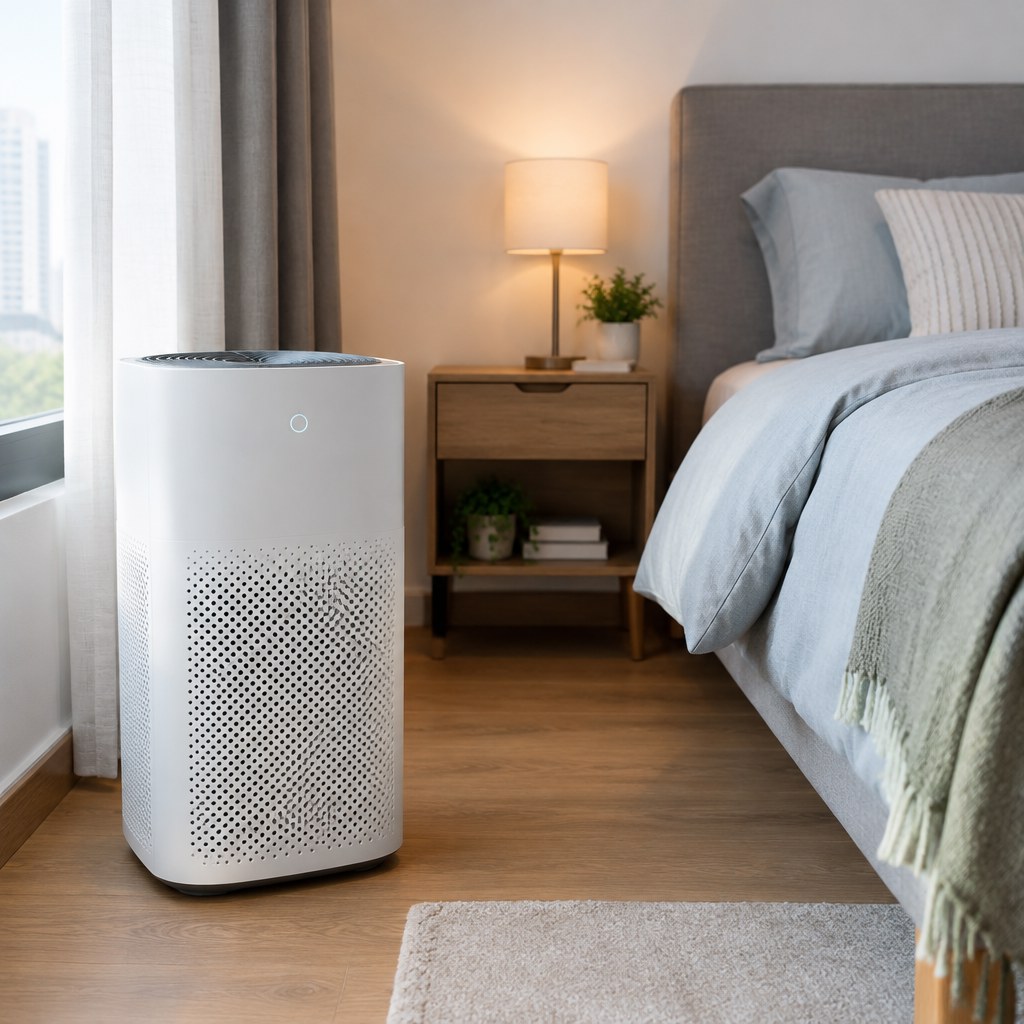
What a HEPA filter is and how it captures particles
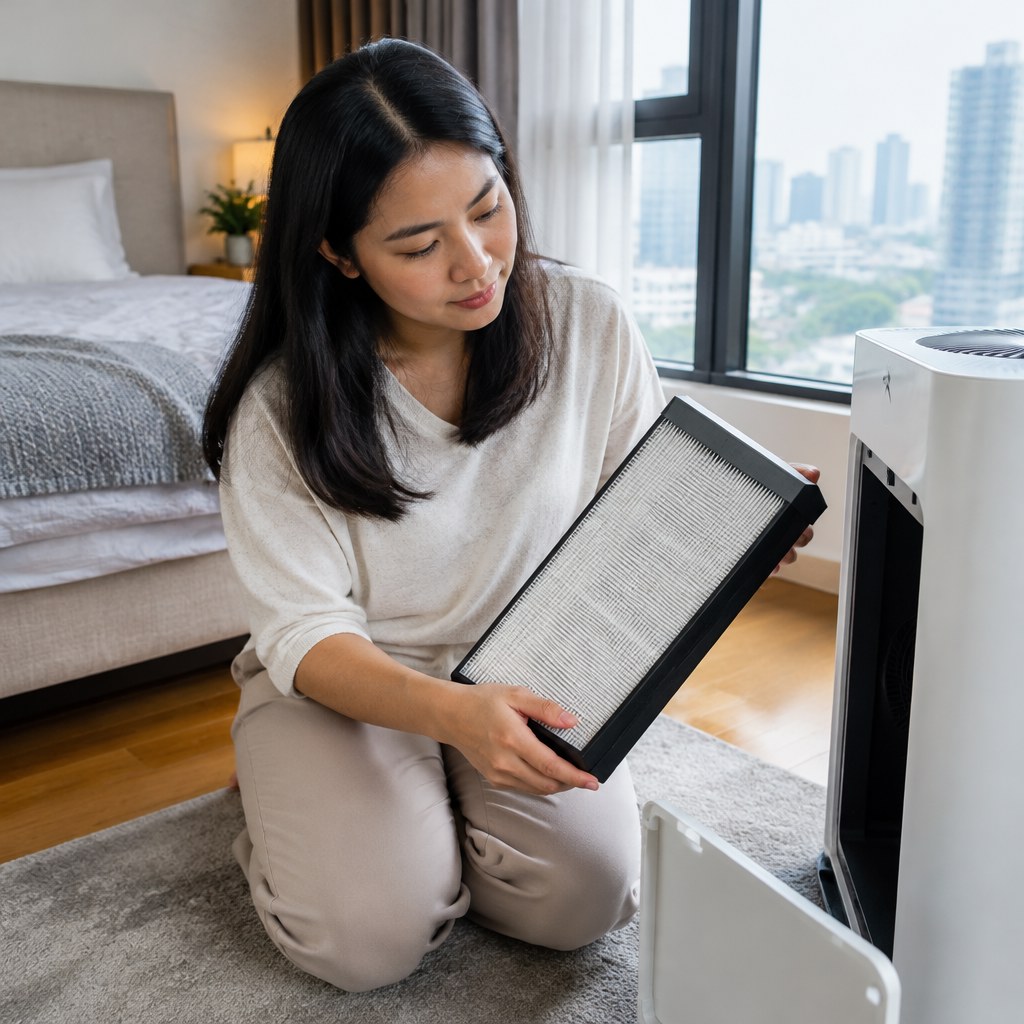
HEPA stands for High-Efficiency Particulate Air. A HEPA filter is a dense mat of very fine fibres arranged in a way that lets air pass through while trapping particles suspended in that air. It is not a simple sieve with neat holes, despite the way it is sometimes explained.
Particles are captured through several mechanisms working together. Larger particles can be intercepted when they travel close enough to a fibre. Heavier particles may collide with fibres because they cannot follow the changing airflow path perfectly. Very tiny particles move in a more random fashion, increasing their chance of touching and sticking to a fibre. The result is a filter that can capture a broad range of particle sizes.
This is why a good HEPA filter helps with fine dust, PM2.5 haze particles, pollen, dust mite debris, pet dander and some mould spores. These are particles, not gases. That distinction is important because an air purifier with excellent HEPA filtration may still do little for a strong cooking smell, tobacco odour, paint fumes or chemical vapours unless it also has enough activated carbon.
Why 0.3 microns does not mean smaller particles pass through
One of the most persistent myths is that a HEPA filter only catches particles that are 0.3 microns or larger. In reality, 0.3 microns is commonly discussed because it is around the most challenging particle size for many fibrous air filters to capture. It is a testing reference, not a hole size.
Particles smaller than 0.3 microns can still be captured, often effectively, because their random movement makes contact with fibres more likely. Particles larger than that are also caught through interception and collision. So, when you see a HEPA efficiency claim based on 0.3-micron particles, read it as a demanding performance benchmark rather than a promise that everything smaller slips through untouched.
No domestic purifier should be described as removing one hundred percent of everything from a real room. Air keeps moving, doors open, people walk around, and new particles enter. The practical goal is meaningful, repeated reduction in airborne particles while the unit is correctly sized and run consistently.
True HEPA, HEPA-type, H13 and H14: how to read the labels
Marketing language can make filter shopping more confusing than it needs to be. “True HEPA” is widely used to indicate that a filter is intended to meet a recognised HEPA-level particulate performance standard. However, the exact wording, test method and published specification still matter. Treat the term as a useful starting point, not your final verdict.
“HEPA-type”, “HEPA-like” or “HEPA-style” are less precise descriptions. They may describe a capable filter, but they do not automatically tell you what standard was used or what efficiency was achieved. If the manufacturer does not clearly state performance, testing basis and compatible replacement filter model, I would be cautious.
Where H13 and H14 fit in
H13 and H14 are classifications often associated with European HEPA filter standards, including EN1822 and the related ISO 29463 framework. In broad terms, H14 is a higher filtration class than H13. These classifications concern filter-media performance under defined test conditions, including the most penetrating particle size.
That does not mean every home purifier needs H13 or H14. A well-designed purifier using suitable HEPA-grade filtration, enough airflow and a sealed filter path can be more useful in an actual bedroom than a premium-sounding filter inside an undersized or leaky machine. Higher-grade media can also create more airflow resistance, so the fan and housing design must support it.
When comparing units, ask what standard is cited, whether it applies to the filter itself or the whole appliance, and whether the maker provides clear replacement information. Avoid assuming a vague “medical grade” phrase means more than a documented specification.
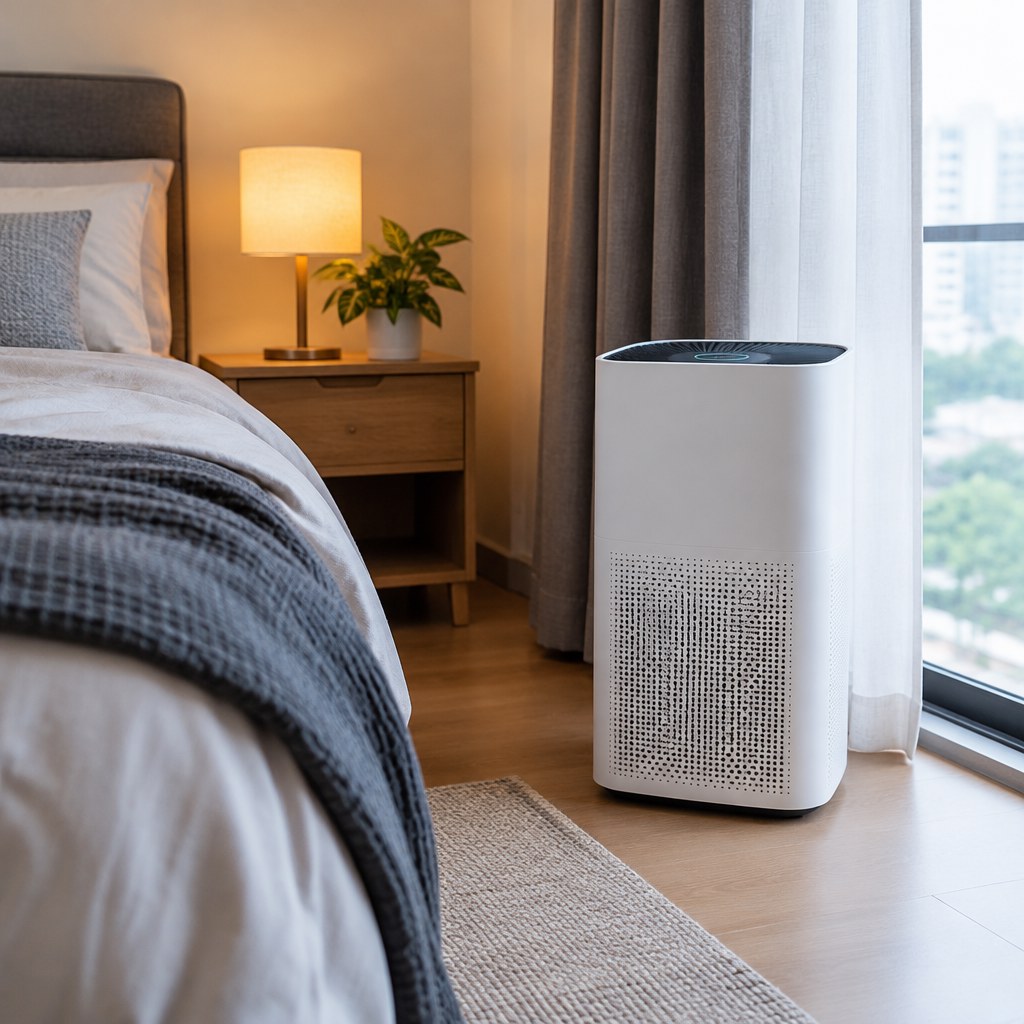
Filter quality matters, but whole-unit performance matters too
A purifier is a system, not just a filter. Even excellent filter media cannot perform as intended if air bypasses the edges, the housing leaks, or the fan moves too little air for the room. This is where CADR, or Clean Air Delivery Rate, becomes helpful. CADR is a whole-unit measure intended to reflect how much cleaned air the appliance can deliver for particular particle types.
You do not need to become an engineer before buying one, but you should match the purifier’s stated room coverage or CADR to your actual space. Be realistic about ceiling height, open doors and adjoining areas. A compact unit may be perfectly adequate beside your bed in a closed bedroom, yet struggle in an open-plan living and dining space.
Sealed construction deserves attention too. The filter should sit securely, with gaskets or a fitted frame that discourages unfiltered air from bypassing it. A washable pre-filter is also useful because it catches hair and larger dust first, helping the main HEPA filter last longer.
- Check the stated room size and preferably a published CADR.
- Confirm that replacement HEPA filters are sold locally or reliably online.
- Look at annual filter cost, not only the promotional unit price.
- Choose a noise level you can live with overnight.
- Use the purifier in the room where you spend the most time.
A sensible purifier running often at a comfortable fan speed is usually more helpful than a powerful model that stays switched off because it sounds like a small helicopter.
When a HEPA purifier is especially useful in Malaysia
Malaysia’s climate and urban living patterns create some very ordinary reasons to consider particle filtration. During haze periods, outdoor PM2.5 can enter through gaps, open windows and frequent door use. Keeping windows closed where practical and running a correctly sized HEPA purifier can help reduce particle exposure indoors. For more haze-specific home steps, you can also read this guide on Malaysia haze, indoor air quality and air purifiers and this practical discussion of haze and indoor air quality in Malaysia.
In a KL condo bedroom, a HEPA purifier can be useful when dust settles quickly, traffic pollution is noticeable, or you sleep with the air-conditioning on and windows shut. Air-conditioning cools and circulates air, but it is not automatically the same as dedicated fine-particle filtration. Your aircon filter may catch larger lint and dust, while a proper HEPA purifier is designed for much finer airborne material.
Homes with cats or dogs may also benefit. HEPA filters can capture airborne pet dander and particles that carry allergens, although they cannot stop pets from shedding or replace regular vacuuming. Likewise, pollen and dust can be reduced in the air, but bedding, curtains and soft furnishings still need normal cleaning.
When it may not be the priority
If your main problem is a musty smell, visible mould, damp walls or condensation, do not expect a HEPA filter to fix the root cause. It may capture airborne spores, but mould needs moisture control, cleaning and investigation of leaks, ventilation or humidity. In our humid weather, a dehumidifier or repairs may be more important than another filter.
If odours, smoke gases or VOCs are the main complaint, look for meaningful activated carbon capacity. A thin black sheet added as a marketing extra has limited adsorption capacity. Carbon needs enough material and replacement intervals that make sense for the pollutant load.
Maintenance is part of the purchase decision
A HEPA purifier is only as good as its condition. Check the pre-filter every few weeks, especially if you have pets, live near a busy road or keep windows open often. Depending on the design, you may vacuum or wash the pre-filter; follow the manufacturer’s instructions rather than improvising with the main filter.
Most HEPA filters are not washable. Water can damage the filter structure and leave it less effective, even if it looks cleaner afterwards. Replace it according to the manufacturer’s schedule, but also consider your real conditions. Heavy haze, high dust loads and continuous operation can shorten practical filter life. A filter-change indicator is handy, although it is often time or airflow based rather than a direct measure of contamination.
Before purchasing, search for the exact replacement filter code. Check current pricing, local stock and whether third-party alternatives are trustworthy and properly fitted. A bargain purifier with expensive, unavailable filters can become a decorative side table remarkably quickly.
Five common questions from Malaysian buyers
Do I need a HEPA filter for haze?
For a room where you want to reduce airborne haze particles, a suitably sized purifier with genuine HEPA-level particulate filtration is a sensible choice. Keep windows closed as practical and run the unit consistently.
Is H13 always better than True HEPA?
Not automatically in daily use. H13 may indicate a higher filter classification, but airflow, sealing, room size, CADR, noise and replacement availability also determine whether the purifier performs well in your home.
Can a HEPA purifier remove cooking smells?
HEPA targets particles. Cooking odours are largely gases, so adequate activated carbon, kitchen ventilation and source control are more relevant. Some cooking smoke particles may still be captured by HEPA.
Can it cure asthma, allergies or sinus problems?
No purifier should be presented as a cure. Reducing airborne particles may support a cleaner environment for some people, but medical symptoms need personalised advice from an appropriate healthcare professional.
Should I run it all day?
For ongoing particle control, longer operation is generally more useful than occasional short bursts. Many people run a quieter setting overnight in bedrooms and increase speed during haze, cleaning or high-traffic periods.
Choose for your room, not just the label
A good HEPA purifier should suit your room size, particle concerns, budget and filter-replacement plan. If you would like help thinking through the basics, CoachKen360 is happy to have a practical conversation.
A sensible final view
A HEPA filter is not a luxury buzzword when your concern is airborne particles. It is a proven filtration approach that can be particularly helpful for haze PM2.5, dust, pollen and pet-related particles, provided the purifier has enough airflow, good sealing and affordable replacement filters. Do not be distracted by dramatic claims or assume that one specification tells the whole story.
Start with the room you want to improve. Consider how often it is occupied, whether windows stay open, whether haze or road dust is an issue, and whether odours or dampness point to a separate problem. Then choose a purifier you can actually run and maintain. That is usually the practical path to better indoor air.
Educational note: This article provides general indoor-air information only and is not medical advice. For persistent breathing symptoms, allergies or concerns about mould exposure, speak with a qualified healthcare or building professional.