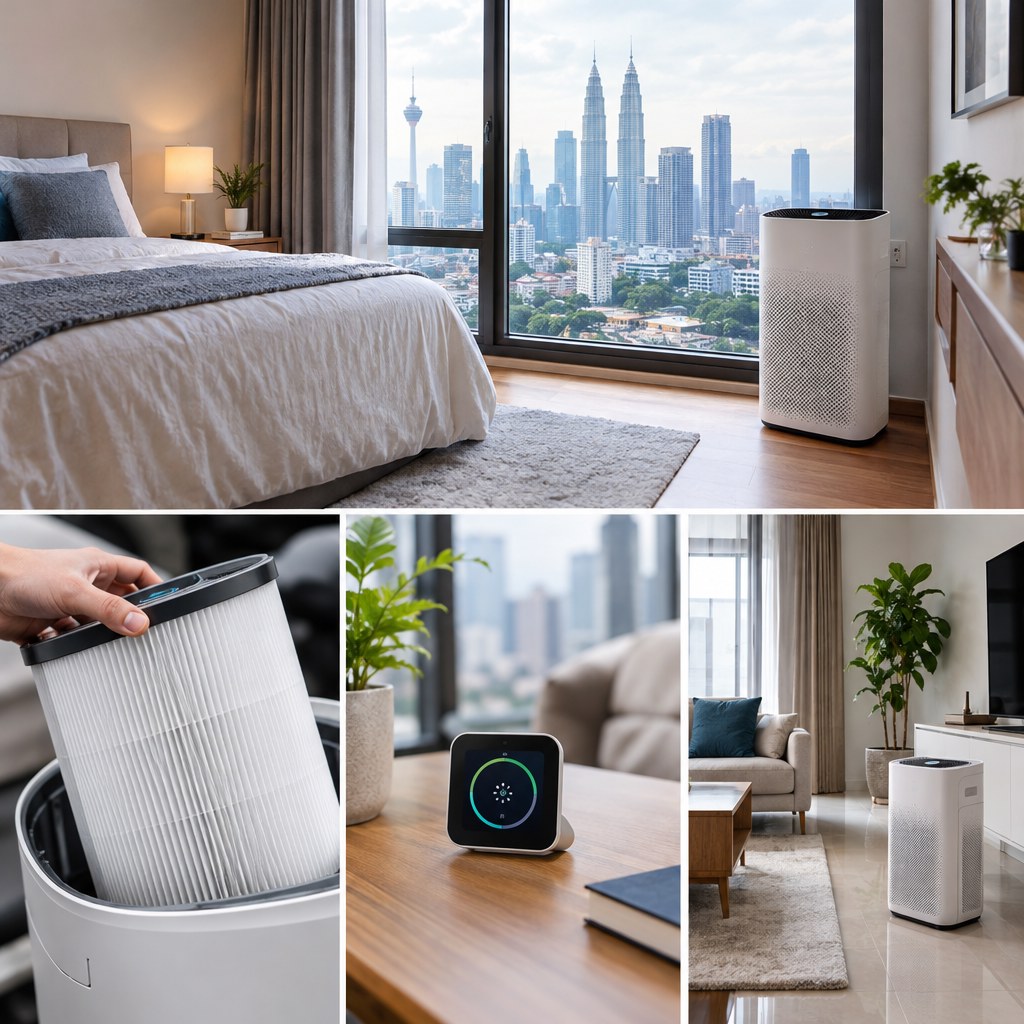
Start with the air problem, not the brand
Choosing the right air purifier in Malaysia is less about finding the most expensive machine and more about matching its cleaning ability to your home, room size and actual concern. If haze and fine dust are your main worries, prioritise a properly specified HEPA air purifier with suitable CADR. If cooking smells, pet odours or traffic fumes are the problem, look closely at the carbon filter too. For a bedroom, quiet operation and ongoing filter cost matter just as much as headline performance.
I would encourage you to treat an air purifier as one part of better indoor air quality in Malaysia, not a magic box, lah. It can reduce airborne particles in the room where it runs, but it cannot fix a persistent mould issue, a smoky kitchen, an open window facing heavy traffic, or poor cleaning habits. The sensible route is to identify your issue, measure the space, compare verified specifications, then budget for the filters before buying.
For wider context on managing indoor air during hazy periods, you may also find my guides on Malaysia haze, home air quality and air purifiers and haze and indoor air quality in Malaysia useful.
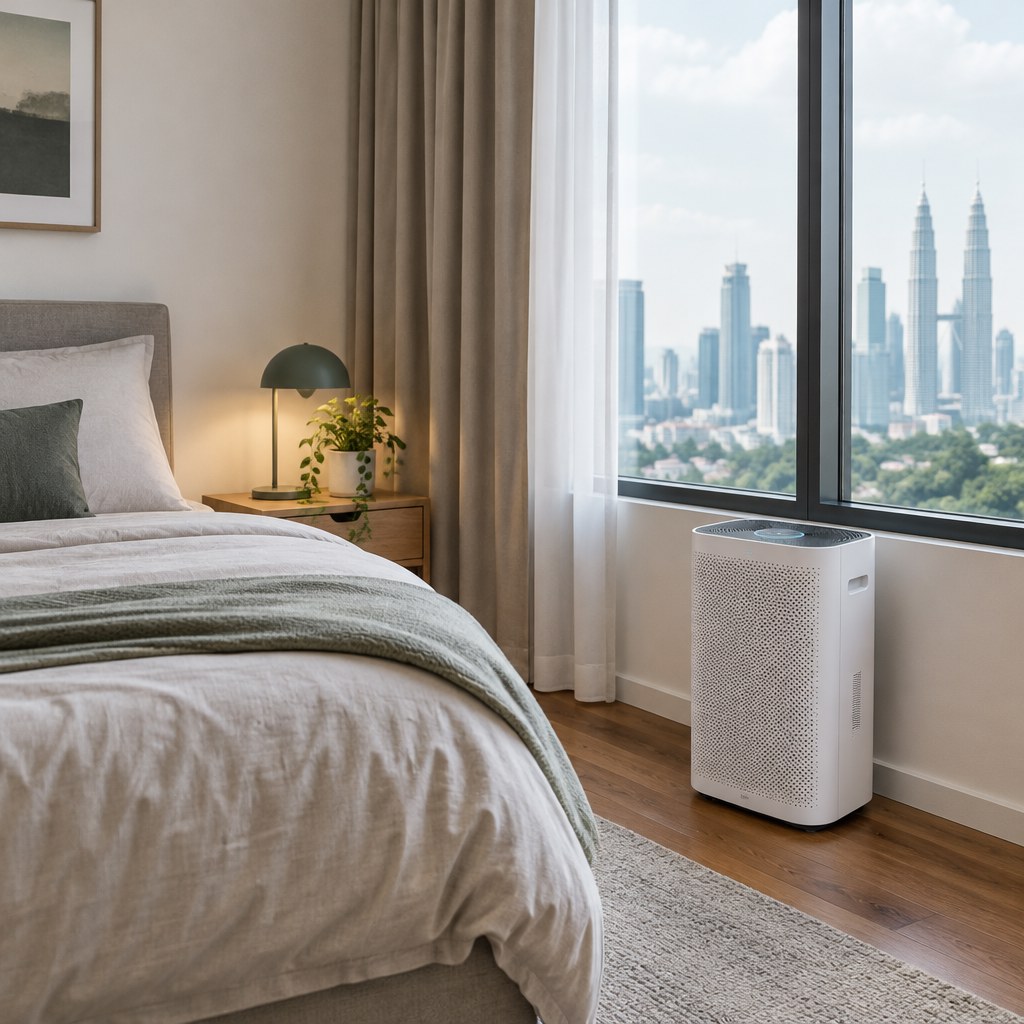
Identify what you want the purifier to handle
Different filters do different jobs. Before searching for the best air purifier Malaysia shoppers can buy, write down what you notice at home. Is there visible dust settling quickly? Does someone wake up sneezing? Is it the familiar outdoor haze smell? Does the room feel stuffy after frying ikan or using cleaning products? Your answer changes what deserves attention on the product label.
Fine particles: haze, dust, pollen and pet dander
Malaysia’s haze episodes make PM2.5 a common concern. These very fine particles can enter homes through gaps, open doors, windows and normal movement in and out. Household dust, pollen and pet dander are larger or mixed-size particles, but a good particle filter can help with these too.
For this job, look for a genuine particulate filter and clear, credible wording about HEPA performance. “HEPA-type”, “HEPA-style” or vague claims may not tell you enough about the filter standard. A manufacturer that identifies the filter classification, states the model’s room coverage and publishes its CADR gives you more to assess than one relying only on attractive marketing.
Odours, smoke and some gases
For smells from cooking, pets, rubbish, tobacco smoke or outdoor traffic, activated carbon is the relevant component. Carbon adsorbs some odour-causing compounds and certain gases, but capacity varies greatly. A thin carbon sheet may help a little with everyday smells yet become saturated quickly. More carbon media generally offers more potential contact area, but it is still not a guarantee that every gas or odour disappears.
Be careful with broad promises such as “removes all VOCs”. Indoor chemicals vary, concentration matters, and a purifier cannot replace source control. Open a suitable window when outdoor conditions are good, use a cooker hood where available, store solvents properly and do not create pollution indoors unnecessarily.
Humidity, mould and stale air
In our humid climate, an air purifier does not dehumidify a room. It may capture some airborne spores, but it cannot remove moisture from walls, ceilings, curtains or a damp mattress. If you see mould or smell persistent mustiness, investigate leaks, condensation, bathroom extraction and humidity control. A dehumidifier, repair work or better ventilation may be the more appropriate first purchase.
Measure the room before comparing coverage claims
“Suitable for up to 50 m²” sounds straightforward, but room coverage statements can be based on different assumptions. Some brands assume a lower cleaning rate; others assume a particular ceiling height or a certain number of air changes per hour. Use the stated coverage as a starting point, not the final answer.
Measure the room’s length and width. Multiply them to get square metres. If you use square feet, divide by approximately 10.76 to get square metres. A typical condo bedroom may be around 100 to 180 square feet, while an open-plan living and dining space can easily be several times larger. Ceiling height also affects the air volume, especially in double-volume homes.
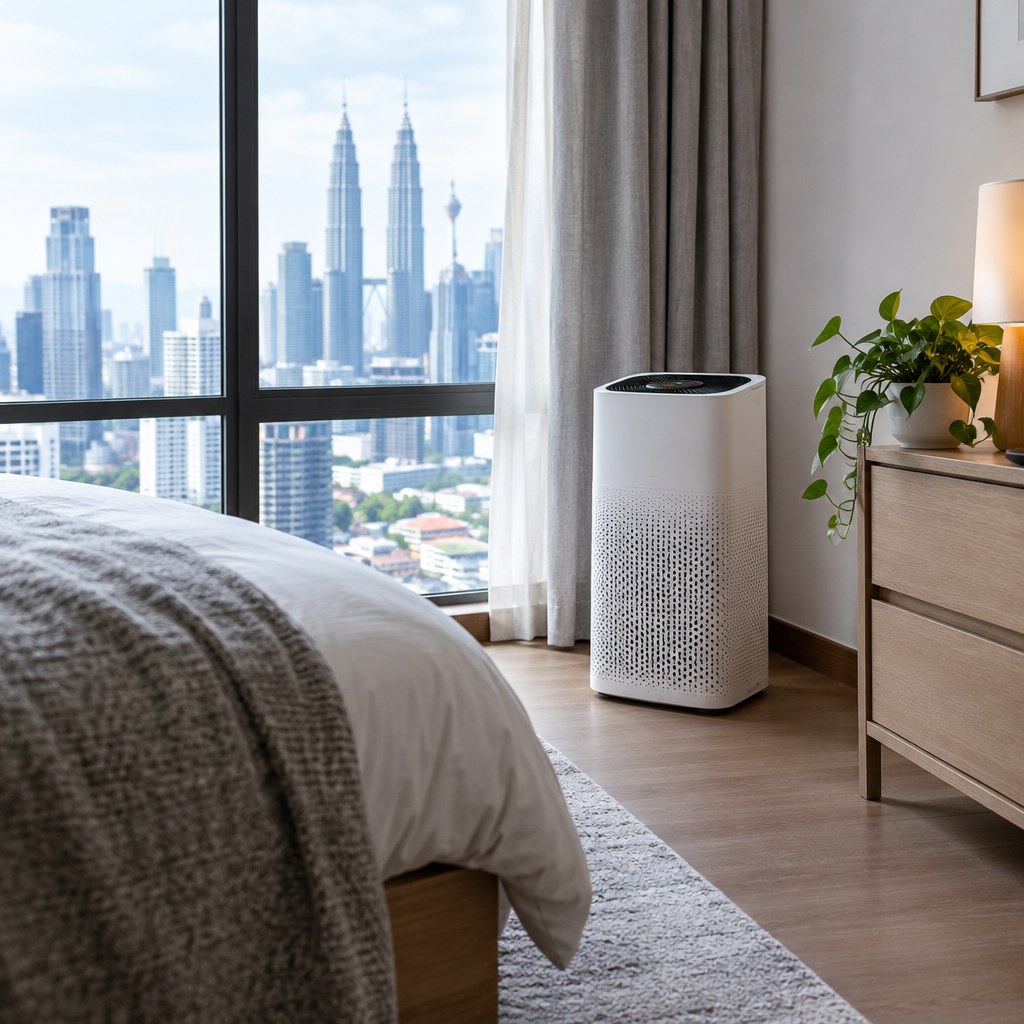
Understand CADR in practical terms
CADR means Clean Air Delivery Rate. It is commonly shown in cubic metres per hour, written as m³/h, and indicates the rate at which a unit can deliver cleaner air for a particular pollutant category under test conditions. Higher CADR can be useful for larger rooms or faster cleaning, provided the figure is credible and relevant to the filter mode you will actually use.
Here is an illustrative calculation, not a promised specification. Imagine a 15 m² bedroom with a 2.7 m ceiling. The room volume is about 40.5 m³. If you want to consider roughly five air changes per hour, multiply 40.5 by five: that suggests looking at a purifier with approximately 200 m³/h CADR or more. Real homes are not laboratory boxes, so allow a margin rather than buying exactly to the number.
A larger unit running on a lower, quieter speed can sometimes be more useful than a small unit pushed permanently to its loudest setting. You are more likely to keep the better-sized unit on overnight, which matters for a bedroom air purifier.
Check the filter claim carefully
“True HEPA” is widely used, but it should invite a few more questions rather than end the comparison. Where possible, look for a stated HEPA standard such as EN 1822 or ISO 29463 classification, or documentation identifying the filter grade. A clear independent test report can be useful, but make sure it relates to the actual purifier model and not merely loose filter material.
It is also worth separating filter efficiency from whole-machine performance. A highly efficient filter inside a low-airflow machine may clean a room slowly. That is why CADR and filter information should be considered together. Good sealing around the filter housing matters too; air that bypasses the filter does not get properly cleaned.
Pre-filters deserve attention because they catch larger fluff, hair and dust before the main filter. If washable, follow the manufacturer’s instructions and ensure it is completely dry before reinstalling. Never wash a HEPA or carbon filter unless the manual explicitly says it is washable. Water can damage media, reduce performance or encourage microbial growth if the filter remains damp.
Avoid ozone-producing features
I would be cautious about devices marketed around ionisation, plasma or ozone generation, especially when the information is unclear. Some technologies may create ozone as a by-product or intentionally. Ozone is an irritant, so do not assume “fresh smell” means healthier air. If a model includes an ioniser, check whether it can be fully switched off and seek clear documentation before using it around children, older adults, pets or people with respiratory sensitivities.
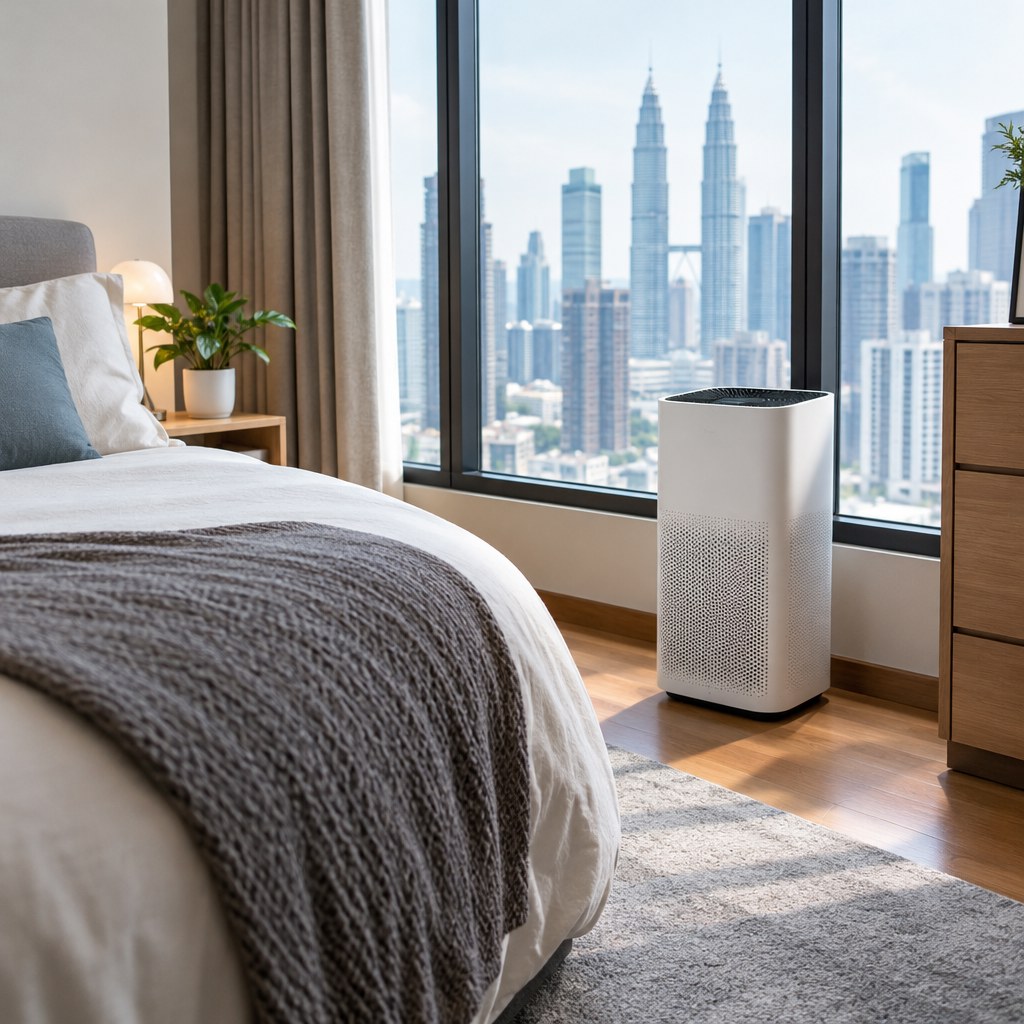
Think about placement, airflow and daily use
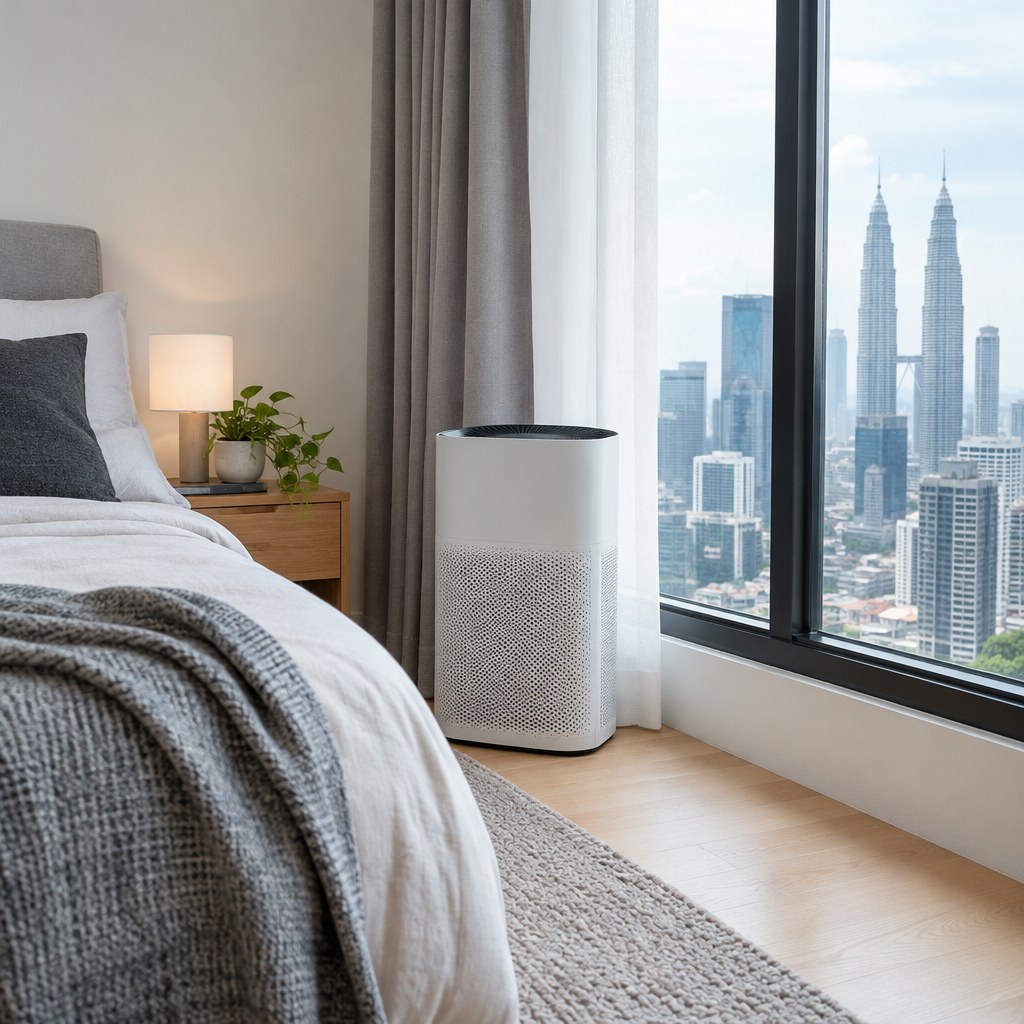
Even a capable purifier can disappoint if it is hidden behind a sofa, tucked into a corner or blocked by curtains. Put it on a firm, stable surface or the floor as permitted by the manual, leaving clearance around the air intake and outlet. Do not aim airflow directly at your face while sleeping if it feels uncomfortable. Keep cords tidy and ensure children or pets cannot tamper with the appliance.
For a bedroom, place the purifier where it can circulate air through the sleeping space rather than immediately beside an open doorway. For a living room, avoid treating the device as though it cleans the entire condo through hallways and closed bedrooms. Walls, doors and separate rooms restrict airflow significantly.
During haze, reduce unnecessary outdoor-air entry by closing windows and doors facing polluted air, checking obvious gaps, and limiting frequent opening where practical. That does not mean a home should be permanently sealed in all weather. When outdoor air improves, sensible ventilation remains important for reducing indoor pollutants and stuffiness.
Air-conditioning cools air and may recirculate it, but a standard split-unit air-conditioner is not automatically a particle air purifier. Its filters may catch some larger dust, yet they are not a substitute for a properly designed purifier with particle filtration and suitable CADR. Clean your air-conditioner filters regularly anyway; dirty filters restrict airflow and reduce comfort.
Compare noise, electricity and the real long-term cost
The purchase price is only one line in the budget. Air purifier maintenance includes replacement filters, cleaning the pre-filter, electricity use and the question many buyers forget: can you reliably buy the correct filter in Malaysia next year? Before choosing, search the exact filter model number, not just the purifier brand.
Replacement intervals depend on use, pollution levels, filter design and sensor behaviour. A filter used daily during haze may need changing sooner than one used occasionally in a clean bedroom. Treat an app notification or indicator light as a prompt to inspect the manual and conditions, not proof that every home follows the same schedule.
Noise matters because a machine is useful only when you can live with it. Compare published noise ratings at low and high speeds if available. Visit a retailer for a listening check where possible, remembering that shop noise can hide fan sound. Sleep mode may be pleasant but too weak for fast cleaning in a larger room, so examine both quiet-mode and higher-speed capability.
- Calculate your room area and note whether doors stay open.
- Choose a realistic CADR with some capacity margin.
- Confirm the particle filter specification, not just a logo.
- Check carbon filtration if smells or traffic odours concern you.
- Read the noise, power and replacement-filter information.
- Confirm local filter availability and total ownership cost.
- Avoid unclear ozone or ioniser claims.
Common questions from Malaysian households
Do I need an air purifier if I use aircon?
Possibly, yes. Aircon mainly cools and recirculates indoor air. Unless your system has specialised filtration, it does not provide the same particle-cleaning performance as a suitable HEPA air purifier. Clean aircon filters and a purifier can work alongside each other.
Should I keep windows closed during haze?
When outdoor air is visibly hazy or local air quality is poor, closing windows and doors can reduce incoming particles while you run the purifier. Also reduce repeated door opening where practical. When conditions improve, ventilate sensibly; indoor air quality is about balancing outdoor pollution, indoor sources and fresh-air needs.
Can one unit clean my whole condo?
Usually, one portable unit works best in the room where it is placed. An open, compact layout may allow some benefit beyond that room, but closed bedrooms and corridors limit circulation. For several regularly used rooms, consider moving one unit deliberately or using separate appropriately sized units.
What is best for a bedroom?
Look for a unit sized for the actual bedroom, with a credible CADR, proper particle filtration, low noise at a useful speed and readily available filters. Bright lights, noisy alerts and an oversized footprint can be surprisingly annoying at night, so practical comfort counts.
Does HEPA remove smells?
HEPA filtration is designed for particles, not odour gases. A carbon filter is the component intended to help with smells. Its effectiveness depends on the amount and type of carbon, the source of the odour and how long the purifier runs.
How often should I replace the filter?
Follow the manual’s recommended interval, then adjust for real conditions such as haze, pets, dust and daily operating hours. Replace earlier if the manufacturer advises it, airflow falls noticeably, odours persist despite source control, or the filter is visibly loaded where inspection is permitted.
Make the choice based on your room, not hype
If you are unsure how to assess your indoor air situation or compare purifier specifications for your space, I am happy to help you think through the practical questions.
A sensible final decision
The right air purifier is one you will run consistently in the room that needs it. Start with the pollutant, then room volume, CADR, filter quality, carbon requirement, noise and replacement cost. Do not be distracted by extra modes that do not solve your particular problem. A modest, well-sized unit with accessible filters is often a more sensible choice than a feature-packed machine that is too small, too loud or too costly to maintain.
Finally, this article is general consumer education, not medical advice. An air purifier may support a cleaner home environment but is not a cure for allergies, asthma or other health conditions. If symptoms are persistent or severe, speak with an appropriately qualified healthcare professional. For product claims, also check the manufacturer’s manual, filter documentation and any independently verifiable test information before you buy.