
Know When a Water Filter Professional Can Help
Most Malaysian homes do not need to panic every time tap water looks slightly different or tastes unfamiliar. However, you should consult a water filter professional when a change is persistent, unusual, difficult to explain, or linked to your home’s plumbing, storage tank, filter condition or recent water disruption. A proper inspection can help separate a simple maintenance issue from something that deserves water quality testing Malaysia households can rely on.
In my view, the best time to ask is before guessing. Replacing cartridges blindly, adding another filter, or relying on a single handheld reading may waste money without identifying the real cause. A water filtration specialist Malaysia homeowners trust should start with the basics: what has changed, where the water comes from, which taps are affected, when the filter was last serviced, and whether the building or water supplier has reported any issue.
This article is not about choosing the “best” machine or comparing filter types. If that is what you need, I have shared my practical thoughts in my guide to choosing a good water filter in Malaysia. Here, let us focus on the decision point: when professional advice is genuinely sensible.
Signs That Deserve Professional Attention
Some water changes are temporary, especially after supply interruptions, nearby pipe work or a building tank cleaning exercise. Still, certain signs are worth documenting and discussing with a professional rather than simply hoping they disappear.
Muddy, yellow, brown or visibly discoloured water
Water that looks brown, rusty, yellowish or cloudy may be related to sediment, disturbed pipelines, ageing internal pipes, a rooftop tank, a ground tank or filter media that is no longer handling particles properly. In an old terrace house, for example, the incoming supply may be fine while sections of older plumbing create discoloration at selected taps. In a condominium, the source may be related to common storage infrastructure rather than an individual unit.
First, check whether the appearance occurs at every tap, only after water has been sitting in the pipe, or only at filtered water outlets. Take a photo, note the date and avoid assuming that a new filter alone will solve it. A water filter inspection can help identify whether the issue seems localised to your home system or should be raised with building management or the water supplier.
Unexpected taste, smell or odour
A sudden metallic, earthy, musty, chlorine-like or stale taste can be unsettling. It does not automatically mean the water is dangerous, but persistent changes should not be ignored. Filter cartridges, stagnant sections of plumbing, a tank condition, recent supply work or changes upstream may all be relevant.
If the unusual taste is only from water after it passes through your filter, stop blaming the incoming supply immediately. The filter, its tubing, faucet or overdue maintenance may deserve attention. If the same issue appears at multiple unfiltered taps, ask neighbours or building management whether others notice it too. This simple comparison can provide useful context before you book a visit.
Slow flow from a filtered-water outlet
Slow flow is one of the most common reasons to arrange water filter maintenance. It may be as simple as a sediment cartridge nearing the end of its useful service life, but low flow can also result from clogged pre-filters, a partially closed valve, pressure issues, fouled tubing, a worn faucet or a system that has not been maintained according to its schedule.
Do not assume slow flow means the water is cleaner because it is being filtered more thoroughly. A restricted system may simply be struggling. If normal tap flow is strong but filtered water is weak, that distinction is useful information for the technician. If all taps have poor pressure, the concern may be plumbing or supply related rather than the filter itself.
Overdue Maintenance Is a Good Reason to Ask
A filter is not a fit-and-forget household appliance. Service intervals depend on the system design, household usage, source water conditions and the manufacturer’s instructions. If you cannot remember when cartridges were changed, cannot find service records, or have inherited a system after moving into a home, professional advice is reasonable.
Maintenance is not only about swapping a cartridge. A careful visit may include checking the housing condition, seals, connections, tubing, leaks, flow, installation position, visible sediment build-up and service history. The professional may also explain what each component is intended to do and whether the current maintenance plan suits your actual usage.
Be cautious about anyone who tells you that a filter has failed based only on its exterior appearance or a quick sales demonstration. Ask what was inspected, what evidence supports the recommendation, which parts need replacing, and whether there are less costly steps to take first. Trustworthy advice should be clear enough for you to understand, lah.
After a long absence or renovation
Consult someone if a property has been vacant for an extended period, if water lines were disconnected during renovation, or if a filter was left unused for months. Stagnant water and neglected equipment need sensible attention before you return to normal drinking use. A professional can assess the installation condition and advise whether flushing, servicing, sanitising where appropriate, replacement parts or properly collected samples are warranted.
When the filter leaks, makes unusual noises or keeps malfunctioning
Small leaks should not be ignored. Water around filter housings, loose fittings, dripping faucets, damp cabinetry or recurring error lights can damage your home and suggest that a seal, connection, valve or component needs checking. Turn off the relevant water supply if safe to do so, follow your unit instructions and arrange assistance rather than repeatedly tightening parts without knowing the cause.
Condominium Tanks, Landed Homes and Internal Pipes
Malaysia’s homes are not all supplied and stored in the same way. That matters. A landed house may have its own storage tank, older pipework or an outdoor filter system exposed to weather. A condominium resident may receive water through shared tanks, risers and building plumbing before it reaches the kitchen tap. The same visible symptom can therefore have very different causes.
For condominium and apartment residents
If several units notice discoloration, sediment, odd odour or pressure changes at the same time, inform building management promptly. Ask whether there has been tank cleaning, pump work, pipe repair, a supply interruption or a known issue affecting the block. Management can investigate common property systems and contact the relevant water supplier where necessary.
Your own water filter may still need servicing, but it should not become the only explanation for a building-wide concern. A good professional will recognise the difference between an appliance issue inside your unit and a condition that needs escalation through management.
For older terrace houses and renovated properties
Older internal pipes can release visible particles or create localised taste and colour changes, especially after water has stood overnight or after plumbing work. A practical test is to compare the first draw of water with water that has run briefly, while noting whether the effect happens at both kitchen and bathroom taps. This is not a safety test, but it gives useful clues.
If only one outlet has a problem, the investigation may focus on that branch line, tap, pipe section or point-of-use filter. If every outlet is affected, it is more sensible to consider the incoming supply, storage tank or broader plumbing system. Professional observations should guide the next step, not fear-based assumptions.
After Water Interruptions, Pipe Works or Flood-Related Events
When water supply returns after an interruption, you may notice temporary cloudiness, sediment or air in pipes. Follow notices from your state water operator and any official advice issued for your area. If there is a formal supply advisory, use the instructions provided by the relevant authority rather than relying on social-media claims.
After nearby pipe repairs or major building works, run water until it appears clear where appropriate and monitor whether the change settles. If muddy water, unusual odour or poor flow persists, report it to the supplier or building management and consider a water filter inspection. If your property has been affected by flooding, damaged plumbing, storage areas or filter equipment should be assessed before routine use resumes.
For public-health information, refer to guidance from the Ministry of Health Malaysia and general drinking-water principles published by the World Health Organization. These resources help keep the conversation grounded in evidence rather than alarm.
What a Professional Can Check, and What Requires a Laboratory
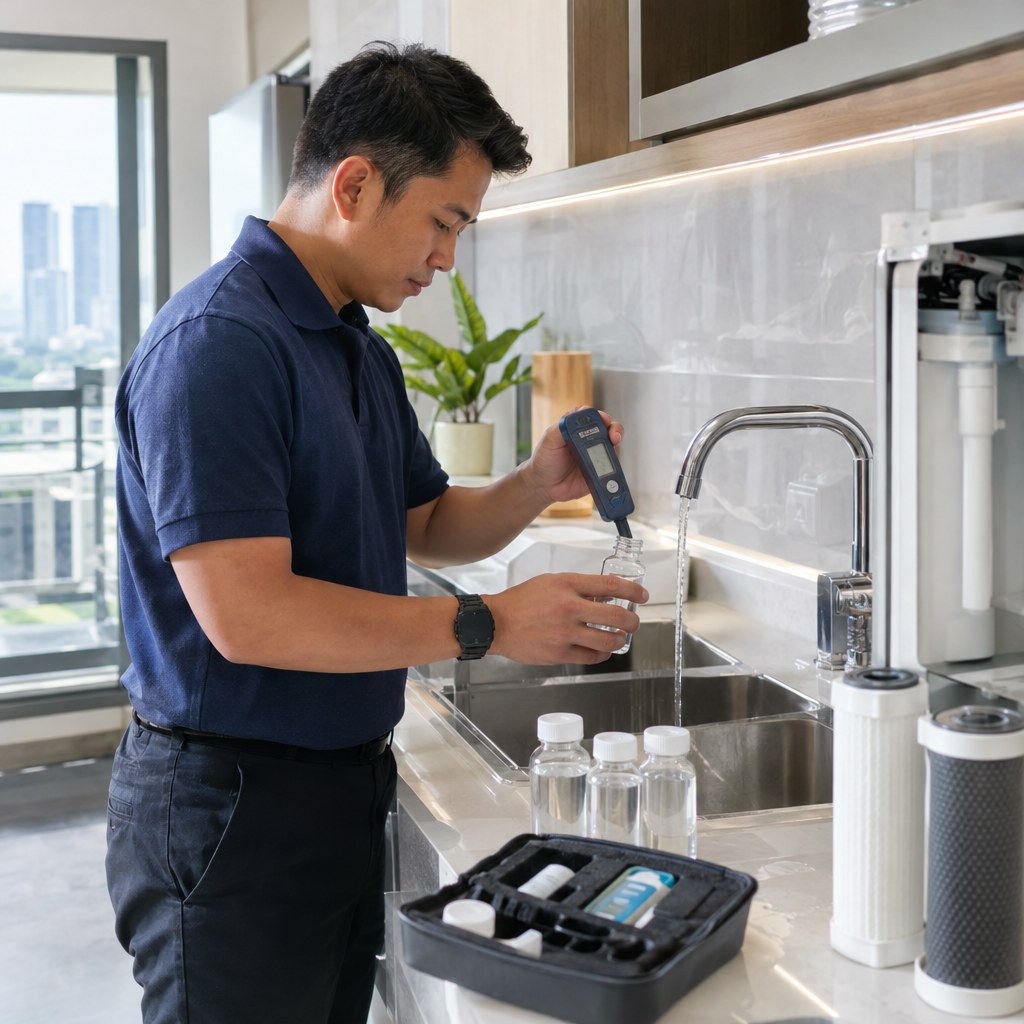
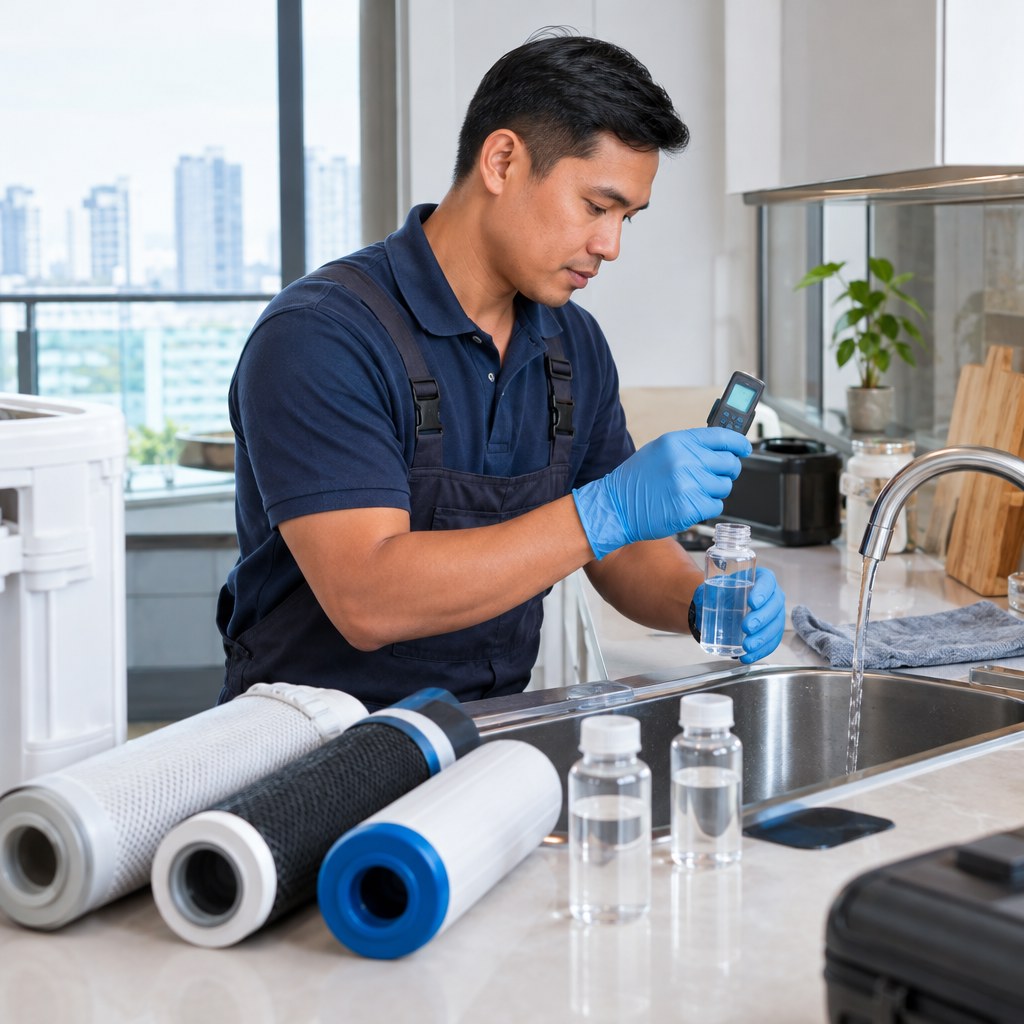
A capable water filtration specialist Malaysia homeowners consult can perform useful on-site checks. These may include a visual review of the installation, cartridge condition, plumbing connections, leaks, flow, maintenance records, water appearance and the locations where symptoms occur. They can also help you understand whether the issue seems more consistent with the filter, household plumbing, tank storage or incoming water.
However, professional honesty matters here. A basic handheld meter or TDS reading alone cannot establish that drinking water is safe. It cannot tell you whether bacteria are present, and it does not reliably identify heavy metals or every contaminant of concern. A low or high reading by itself is not a complete verdict on drinking water quality Malaysia households should use for major decisions.
When there is a genuine reason to investigate quality beyond visible condition and equipment performance, ask about appropriate laboratory testing and proper sampling. The useful test depends on the concern. For example, a test plan for a persistent metallic concern may differ from one for suspected microbial contamination. Sampling method, sample location and timing matter; poor sampling can create misleading results.
Questions to Ask Before Agreeing to Work
A professional consultation should leave you clearer, not more confused. Before approving servicing, replacements or testing, ask a few direct questions:
- What did you observe during the inspection?
- Is the concern likely related to the filter, plumbing, storage tank or incoming supply?
- Which parts need attention now, and which can wait?
- What does the proposed maintenance or test actually check?
- Are laboratory results recommended, and why?
- What are the service scope, sample handling process and charges?
Also ask for maintenance records and itemised recommendations. A dependable vendor should not pressure you into an immediate upgrade simply because you are concerned. Good advice recognises that sometimes the answer is a cartridge change, sometimes a plumbing repair, sometimes a management report, and sometimes no major action beyond monitoring.
For a broader perspective on everyday drinking concerns, you may also find this article helpful: is your drinking water really clean?.
Frequently Asked Questions
Should I call a professional whenever my tap water looks cloudy?
Not always. Temporary cloudiness can be caused by air bubbles, particularly after a supply interruption. If it clears quickly, note the situation and monitor it. If cloudiness persists, appears with sediment, affects multiple outlets or comes with a strange smell or colour, seek advice from the supplier, building management or a water filter professional.
Can a TDS meter prove that my drinking water is safe?
No. TDS is only one basic measurement of dissolved substances. It cannot confirm the absence of bacteria, heavy metals or other contaminants. Use it as limited information, not as a complete drinking-water safety verdict.
Who should I contact first in a condominium?
If the issue affects several taps or neighbours, contact building management first because tanks, pumps and common pipes may be involved. If the concern is limited to your filtered-water outlet, arrange an inspection of your own system as well.
Is a strange chlorine smell always a filter failure?
No. Chlorine-related odour can be influenced by supply conditions, recent maintenance or a filter that is due for service. Compare filtered and unfiltered water, check your maintenance date and seek professional guidance if the change persists or is accompanied by other unusual signs.
Test the Facts Before Making a Big Decision
Unsure whether your water filter is doing the right job? Contact CoachKen360. Tell us what you are seeing or tasting, and let us discuss whether checking your water, filter condition and relevant test results makes sense. Test the facts first, then decide whether servicing, professional sampling or any new system is really necessary. Ask about available services, testing scope and charges.
In short, consult a professional when the issue is persistent, unexplained, linked to overdue water filter maintenance, connected to visible equipment problems, or potentially related to your building, tank or plumbing. Stay calm, record what you notice, involve the right party and choose evidence over assumptions. That is the practical way to protect your household budget and make informed decisions about your water.