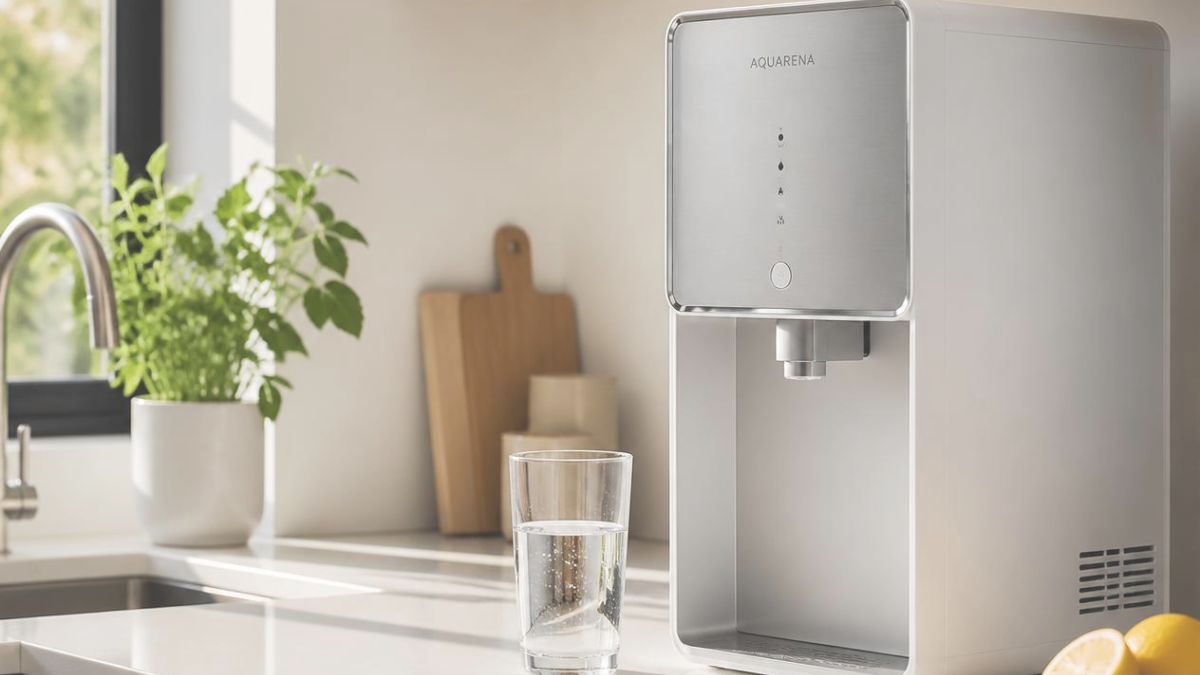
Water water everywhere, but what exactly are you drinking?
Sounds dramatic, right?
But think about it.
Every single day you use water.
You wake up, brush your teeth — water.
Make coffee — water.
Cook rice — water.
Wash vegetables — water.
Shower — water.
Make soup — water.
Take medicine — also water.
And of course, throughout the whole day, you drink water.
So if there is one thing entering and touching our body every single day, probably more consistently than almost anything else, it is water.
Yet strangely enough, many of us will spend a lot of time choosing our food, vitamins, skincare products and even what cooking oil to use…
…but when it comes to water?
“Aiya, water is water lah.”
I used to think like that too.
Not anymore.
Quick Answer: What Makes a Good Water Filter?
A good water filter is not simply the most expensive machine or the one with the fanciest advertisement.
A good quality water filter should be suitable for the water entering your home, use an appropriate filtration technology, clearly explain what it is designed to reduce, have proper testing or certification where applicable, provide enough capacity for your household, and have reasonable long-term maintenance and filter replacement costs.
Most importantly, understand what you are buying and why you need it.
Don’t buy a water filter because somebody tells you, “This one very good!”
Ask:
Good at doing what?
That is the question I always want people to understand first.
Key Takeaways
- Water quality matters because we drink, cook and wash with water every day.
- Malaysian public drinking water is treated and monitored; having a home filter does not automatically mean the public supply is “unsafe.”
- Different water filters are designed to deal with different substances and concerns.
- A more expensive water filter is not automatically a better water filter.
- Look at filtration technology, testing, capacity, replacement frequency, maintenance and long-term cost.
- Don’t only ask about the machine price — ask how much it will cost you to own for many years.
- A good water filtration system should suit your actual household needs.
- Always understand what the filter is proven or designed to reduce instead of believing every sales claim.
My Thinking About Water Changed Over the Years
Growing up in Malaysia, I never thought so much about water.
Turn on the tap, got water, use lor.
Simple.
I think many Malaysians from my generation grew up the same way.
People will say:
“Malaysia water ok one lah. I drink so many years already. You see, still alive!”
Cannot argue with uncle logic right? 😂
And to be fair, Malaysia does have treated public water supplies. Drinking-water quality is subject to national standards and monitoring, with the Malaysian framework drawing on Ministry of Health requirements and WHO drinking-water principles.
So I am not here to scare you and tell you every drop coming from your tap is poison.
Please lah.
That is not how I work.
What changed my thinking was when I started learning more about water treatment, filtration and what actually happens between the source of water and the glass in our hand.
Then I started asking questions.
What is inside the water?
What does a filter actually remove?
What doesn’t it remove?
How old are the pipes?
Does the house have a storage tank?
How well is that tank maintained?
What happens between treated water leaving the system and eventually coming out of my kitchen tap?
Suddenly “water is water” became quite a big subject.
Is Malaysian Tap Water Safe?
This question comes up all the time.
And my answer is:
Don’t simply answer this question with either “yes” or “no.”
Malaysia has systems for treating and monitoring public water. Drinking-water quality standards cover physical, microbiological and chemical parameters.
That is important to acknowledge.
But there is another side of the story.
Water has to travel through a distribution system before reaching your home.
Then depending on where you live, your building, internal plumbing, storage tanks and maintenance conditions become part of the journey too.
So the water leaving a treatment facility and the water you finally use at home are not questions I like to treat as exactly the same thing.
That’s why instead of asking only:
“Is Malaysia water safe?”
I prefer asking:
“What is the quality of the water I am actually using in my own home?”
Very different question.
Why Water Quality Matters So Much
Your body needs water.
No argument there.
But what matters isn’t merely drinking “enough” water.
The quality and safety of drinking water matter too.
The World Health Organization treats safe drinking-water as an important public-health issue and maintains guidelines covering microbiological and chemical hazards that can occur in water.
This doesn’t mean every chemical detected in water automatically makes the water dangerous.
Dose matters.
Concentration matters.
Standards matter.
This is where I don’t like scare tactics.
Sometimes somebody hears the word “chemical” and immediately panics.
Eh brother, water itself is a chemical compound also.
We need to understand things properly.
The real question is whether something is present at a level that matters, and whether the filtration system you are considering has actually been designed and tested for that concern.
But Coach, What About Chlorine?
Ah.
This one everybody talks about.
First, understand why chlorine exists.
Chlorination is used to disinfect water and protect against harmful microorganisms. So don’t simply hear “chlorine” and think it is some evil thing somebody accidentally poured inside your water.
WHO includes chlorine within its drinking-water guidance and considers both its role in treatment and appropriate levels in drinking water.
At the same time, some households dislike the taste or smell associated with chlorinated water, which is one reason certain filtration technologies are used at the point of use.
Again:
Understand first.
Then decide.
Not fear first, buy first, understand later.
Can Water Quality Affect Your Health?
Of course water quality can affect health — when water contains harmful microorganisms or contaminants at unsafe levels.
That is exactly why countries have drinking-water standards in the first place.
WHO drinking-water guidance covers various microbiological and chemical hazards because contaminated drinking water can create genuine health risks.
But please don’t twist what I am saying.
I am not saying:
“Drink Malaysian tap water and you will become sick.”
No.
I am saying:
Water quality matters enough that we should understand what we are drinking rather than taking everything for granted.
That, to me, is common sense.
Can Water Affect Your Skin Too?
Here’s another interesting thing.
We don’t only drink water.
We bathe in it.
Wash our face with it.
Wash our hair with it.
Our skin comes into contact with water every single day.
Now, if somebody has persistent eczema, dermatitis, itching or another skin condition, please don’t simply blame the water.
Skin problems can have many causes and should be assessed properly by a healthcare professional when needed.
A water filter is not medical treatment.
I need to make that very clear.
But if your household notices unusual odour, visible sediment or other changes in your water, that is certainly something worth investigating rather than ignoring.
Good wellness is not about becoming paranoid.
It is about becoming aware.
Water Filter, Water Purifier… What’s the Difference?
Wah, this terminology can become very confusing.
One salesman says filter.
Another says purifier.
Another says filtration system.
Then got membrane, carbon, UV, reverse osmosis, sediment filter…
After listening for 20 minutes you start thinking:
“Actually I just wanted water to drink leh.”
😂
Here’s the easiest way I explain it.
A water filter is a broad term for a system that passes water through one or more filtration media or processes to reduce particular substances.
Different technologies do different jobs.
A “water purifier” is often used as a marketing or product-category term for systems designed to provide more extensive treatment, but don’t judge performance simply from the word purifier.
The name doesn’t tell you enough.
You need to ask:
What technology is inside?
What is it designed to reduce?
What testing supports those claims?
That is much more meaningful.
What Can a Good Water Filter Remove?
This is where you need to be careful.
There is no honest answer that says:
“A good water filter removes everything.”
Different systems can be designed to reduce different things, for example:
- Sediment and suspended particles
- Certain tastes and odours
- Chlorine taste or odour
- Particular chemicals
- Particular metals
- Certain microorganisms, depending on the treatment technology
- Other contaminants specifically covered by that system’s validated performance
Notice how I keep saying:
depending on the system.
Because that is important.
Don’t look at a water filter and assume it removes something merely because another filter can.
Ask for the actual specifications.
What Makes a Good Quality Water Filter?
Now we come to the big question.
People always ask:
“Coach, which water filter good ah?”
Before I recommend anything, I think there are several things you should look at.
1. What Does the Filter Actually Do?
First question.
Always.
Don’t be distracted by touchscreen, nice casing, hot water, cold water, LED light and all those things first.
Those are features.
I want to know about filtration.
What does it reduce?
How does it reduce it?
What are its limitations?
2. Has Its Performance Been Properly Tested?
Very important.
Anybody can print a beautiful brochure.
Anybody can say:
“99.999999% clean!”
I also can say my kopi makes me 20 years younger.
Doesn’t mean it’s true.
Look for meaningful independent testing or certification relevant to the claims being made.
And look carefully at what exactly was tested.
Certification is much more useful when you understand what the certification actually covers.
3. What Filtration Technology Does It Use?
There are many different approaches.
Sediment filtration
Designed primarily to capture physical particles depending on the filter rating.
Activated carbon
Commonly used to reduce certain tastes, odours and chlorine-related characteristics, depending on the filter design.
Membrane filtration
Uses membranes with particular filtration characteristics.
Reverse osmosis
Uses a membrane-based process capable of reducing a broad range of dissolved substances, depending on the system and operating conditions.
UV treatment
Uses ultraviolet light for microbial treatment when properly designed and operated.
Multi-stage systems
Combine several technologies because one filtration method may not address every concern.
Which is “best”?
Wrong question again.
The better question is:
Which technology is appropriate for what you want the system to achieve?
Indoor Filter or Outdoor Filter?
Another common question in Malaysian homes.
Some people install filtration at the main incoming water supply.
Some install one at the kitchen.
Some have both.
Again, their jobs can be different.
Outdoor or whole-house filtration
Usually deals with water before it is distributed throughout much or all of the home.
That means water used for:
- Showering
- Washing
- Laundry
- Bathrooms
- Kitchen use
may first pass through the system, depending on the plumbing configuration.
Point-of-use drinking water filter
Usually focuses on water from a particular tap or drinking-water dispenser.
This is where more specialized treatment may take place depending on the system.
There isn’t necessarily one universal correct setup.
Your property type, plumbing, household size, water characteristics and budget all matter.
How Much Does a Good Water Filter Cost in Malaysia?
Ah, finally.
The Malaysian favourite question.
“How much?”
😂
Fair question.
But please don’t compare water filters only by the purchase price.
A water filtration system has several costs.
Initial cost
The machine or filtration system itself.
Installation cost
Some systems require proper installation, plumbing changes or additional fittings.
Replacement filters
Filters don’t last forever.
Some components are consumables and need replacement according to usage and manufacturer recommendations.
Servicing and maintenance
Some systems require regular servicing.
Electricity
Certain systems use electricity while others may not.
Water consumption
Certain treatment technologies may use additional water as part of their process.
Long-term ownership
This is the number I really care about.
Ask yourself:
What will this system cost me over 5 years?
Not just:
“How much today?”
A RM1,000 system with expensive consumables and constant problems might eventually cost more than something that looked expensive initially.
And the opposite can also be true.
Do your calculation.
Cheap Water Filter vs Expensive Water Filter
Is an expensive water filter automatically better?
No.
Is a cheap water filter automatically bad?
Also no.
Price alone tells me very little.
A higher price might reflect:
- Better filtration technology
- More filtration stages
- Higher capacity
- Better materials
- More extensive testing
- Certification
- Research and development
- Better warranty
- Installation
- Servicing
- Replacement support
- Brand distribution costs
- Convenience features
Or sometimes…
It is simply expensive.
😂
That’s why you need to investigate.
Don’t buy price.
Buy performance, suitability and long-term value.
Don’t Forget Filter Replacement
This is one of my pet peeves.
People spend thousands buying a water filtration system.
First month very excited.
Second month still very excited.
Two years later…
“Eh, need change filter meh?”
Aiyoh.
A filtration system is only as useful as its maintenance allows it to be.
Replacement schedules can depend on:
- Water consumption
- Filter capacity
- Incoming water condition
- Household size
- Manufacturer specifications
- Actual system design
So when somebody sells you a water filter, ask immediately:
How often do I need to replace the filter?
How much does replacement cost?
Who does the servicing?
What happens if the replacement cartridge is no longer available?
These questions are not sexy.
But five years later, you will be happy you asked.
10 Questions I Would Ask Before Buying Any Water Filter
If you are shopping for a water filter in Malaysia, save this list.
1. What exactly is this filtration system designed to reduce?
Don’t accept “everything.”
Ask specifically.
2. What technology does it use?
Understand what is happening inside the machine.
3. Are the filtration claims independently tested or certified?
And what exactly does the test or certification cover?
4. How much water can it process?
Important for families.
5. How frequently must the filters be replaced?
Ask based on both time and usage.
6. How much do replacement filters cost?
Don’t discover this after buying.
7. What is the estimated 5-year ownership cost?
Machine + filters + service + maintenance.
8. Who will service the machine?
And how easily can you get support?
9. Does it suit Malaysian household conditions and my particular home?
Condo and landed property may have different setups.
10. Would I still buy it if nobody pressured me today?
This last one is Coach Ken’s special question.
If the salesperson says:
“Today only! Sign now!”
I become even slower.
😂
A good product should survive your research.
What About Bottled Water?
Some people tell me:
“Never mind lah Coach, I just buy bottled water.”
Can.
That’s a choice too.
But calculate properly.
If an entire family drinks bottled water every day, how much are you spending each month?
How many bottles are you carrying?
How much plastic packaging are you using?
How convenient is it?
Then compare that with the long-term cost and convenience of treating drinking water at home.
I’m not telling everybody that one answer is correct.
I’m telling you to calculate.
Boiling Water vs Filtering Water
Another common Malaysian habit.
Boil everything.
My generation especially.
Important distinction:
Boiling and filtration are not the same process.
Boiling can be useful for controlling many microorganisms when performed properly.
But boiling does not mean every possible dissolved chemical or physical contaminant magically disappears.
Likewise, filtering water doesn’t automatically mean every microorganism is removed.
Different processes serve different purposes.
Once you understand this, choosing your water treatment becomes much easier.
How Do You Know Whether Your Home Needs a Water Filter?
This is where I don’t like giving blanket answers.
Every household is different.
Start by looking at your situation.
Do you notice:
- Unusual taste?
- Strong or unusual odour?
- Visible particles or sediment?
- Discolouration?
- Recurring plumbing deposits?
- An old storage tank?
- Older internal plumbing?
- Changes in water appearance after interruptions or maintenance?
Some of these issues may have explanations unrelated to drinking-water safety, but they are worth investigating.
You may need to speak with your water provider, building management or an appropriate professional depending on the issue.
A filter should not be used to cover up a serious unidentified water problem.
Find the cause.
Then decide what treatment makes sense.
“Coach, Which Water Filter Do You Personally Believe In?”
Eventually everybody asks me this.
And this is where I normally tell them:
Don’t buy because Coach Ken says good lah.
Seriously.
I would rather you understand why I chose something.
After spending years learning about and using water filtration systems, I care about several things:
I want to understand the filtration technology.
I want to know what it is designed to reduce.
I want meaningful testing behind the claims.
I want reliability.
I want proper replacement filters.
I want servicing and support.
I want something my family can realistically use every day.
And I want something that makes sense over the long term.
Those are the standards I apply when I look at a water filtration system.
You should have standards too.
A Good Water Filter Is Not About Fear
This part is very important to me.
I don’t want somebody buying a water filter because I frightened them.
That’s not education.
That’s selling fear.
I would rather you understand this:
Malaysia treats and monitors public drinking water.
At the same time, safe and good-quality water is genuinely important to health, and WHO recognizes drinking-water quality as a major part of protecting public health.
Both statements can be true.
Choosing additional filtration at home is a personal household decision based on your circumstances, expectations and preferred level of treatment.
Very simple.
Wellness Is Often About the Things We Do Every Day
After coaching people for so many years, one thing I have learned is that everybody likes the big solution.
New supplement.
New diet.
New exercise machine.
New superfood.
But health is often built around very ordinary things that happen every single day.
How you move.
What you eat.
How you sleep.
How you manage stress.
And yes…
the water you use and drink every day.
Water is not something you consume once a month.
You are using it from morning until night.
Your children use it.
Your parents use it.
Your spouse uses it.
You drink it.
You cook with it.
You wash food with it.
You shower with it.
So to me, understanding your household water is not being fussy.
It is part of taking responsibility for your everyday environment.
Is Good Water Worth Paying For?
Let me ask you something.
How much do we spend on our phones?
RM2,000?
RM4,000?
RM6,000?
Some people change phone every two years.
Car?
Thousands every month.
Coffee?
RM10, RM15, RM20 — drink already gone.
Then when talking about something the whole family uses every single day:
“Wah, water filter expensive leh.”
😂
I am not saying you must buy an expensive water filter.
Please don’t misunderstand me.
I am saying look at value differently.
If something serves your household every day for years, calculate the cost per day.
Then decide whether that value makes sense to you.
My Advice Before You Buy Any Water Filter
Don’t rush.
Don’t buy because somebody scares you.
Don’t buy because somebody shows you dirty-looking water in a dramatic demonstration.
Don’t buy because your neighbour bought one.
And don’t even buy simply because Coach Ken recommends one.
Learn first.
Ask questions.
Understand the technology.
Check what it is designed to reduce.
Look at testing and certification.
Understand maintenance.
Calculate replacement costs.
Think about your family.
Then decide.
That is how I would want somebody to buy something from me too.
Frequently Asked Questions About Water Filters in Malaysia
What is a good water filter for a Malaysian home?
A good water filter should be chosen according to the household’s water conditions, required filtration performance, usage, budget and maintenance preferences. Look beyond branding and consider the actual filtration technology, independently supported performance claims, capacity, replacement filters and long-term cost.
Is a more expensive water filter always better?
No. Price may reflect technology, capacity, testing, materials, support and additional features, but price alone does not prove filtration quality. Compare performance and total ownership cost instead.
How much does a water filter cost in Malaysia?
Water filter costs vary greatly depending on the type of system, technology, installation and features. When comparing prices, include replacement cartridges, servicing, electricity where applicable and other ongoing costs rather than looking only at the initial purchase price.
How often should I change my water filter?
It depends on the filter, capacity, household consumption and incoming water conditions. Follow the manufacturer’s replacement recommendations and don’t assume every filter has the same lifespan.
Is filtered water better than boiled water?
They perform different functions. Boiling is primarily a heat-treatment method and can control many microorganisms when carried out properly. Filtration performance depends on the technology being used. One should not automatically be considered a substitute for the other.
Does a water filter remove chlorine?
Some filtration technologies, particularly appropriate activated-carbon systems, can reduce chlorine-related taste and odour, but performance depends on the particular filter. Check the manufacturer’s validated performance claims.
Should I install an outdoor or indoor water filter?
It depends on what you are trying to achieve. Whole-house systems treat water entering a larger part of the home, while point-of-use systems concentrate on water from a specific outlet, usually for drinking and cooking. Some households use both.
Can a water filter improve skin problems?
A water filter should not be presented as treatment for eczema, dermatitis or other medical conditions. If you have persistent skin problems, seek appropriate medical advice. However, households concerned about the characteristics of their water can investigate the water source and determine whether appropriate treatment is needed.
Is Malaysian tap water safe?
Malaysia has drinking-water standards and monitoring systems for treated public water. Local conditions can nevertheless differ, and plumbing, storage and building systems can affect water before it reaches an individual household. If you are concerned about your home’s water, investigate the specific issue rather than assuming either that everything is unsafe or everything is perfect.
What should I check before buying a water filter?
Check its filtration technology, claimed contaminant reduction, testing or certifications, flow and capacity, replacement frequency, replacement cost, servicing, warranty and total long-term cost.
One Last Question From Coach Ken
Before you leave this page, I want you to do something.
Tonight when you go home…
Turn on your kitchen tap.
Fill one glass of water.
Look at it.
Smell it.
Think about where it came from.
Think about the pipes and systems it travelled through before reaching your glass.
Then ask yourself:
“Do I actually know what kind of water my family is using every day?”
Not scared.
Not paranoid.
Just aware.
We spend so much time protecting our health, buying better food, exercising, taking care of our skin and trying to stay strong as we get older.
But water?
Sometimes we don’t even think twice.
To me, good-quality water isn’t some luxury item.
Water is something your family depends on every single day.
And if you are going to invest in a water filtration system, invest in one because you understand it — not because somebody gave you a good sales pitch.
Not Sure Which Water Filter Is Right for Your Home? Ask Coach Ken
If you’ve been thinking about installing a water filter, replacing your old one, or simply want to understand what makes one filtration system different from another, you are welcome to speak with me.
I have spent years using, learning about and dealing with home water filtration, and I would rather help you understand the choices first than push you into buying something you don’t understand.
Tell me:
How many people are in your home?
What kind of property do you stay in?
What are you currently doing with your drinking water?
And what concerns you most about your water?
From there, we can talk.
No need to become water scientist lah.
You just need to know enough to make a good decision for yourself and your family.
Talk to Coach Ken about choosing a quality water filtration system for your home.
Because when something goes into your body and your family’s body every single day…
I think it deserves more than five minutes of thought.
— Coach Ken
Disclaimer: This article provides general educational information about home water filtration and is not medical advice or a guarantee that a particular water filtration system will prevent or treat health conditions. Water quality and filtration requirements vary by location, property and system. For suspected water contamination or health concerns, consult the appropriate water authority, qualified professional or healthcare provider.